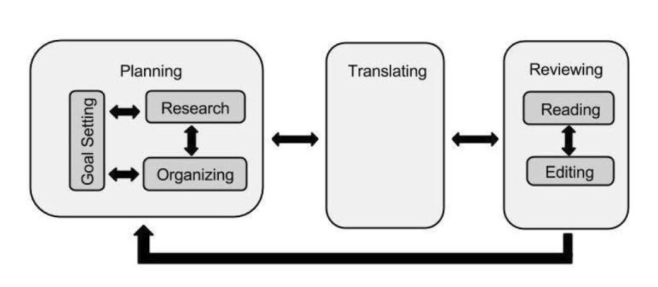
What you think the research on handwritten vs keyboarded notetaking shows is flawed

If you’ve spent any time reading about study strategies, you’ve probably encountered some version of this claim: writing notes by hand is better than typing them on a laptop. There seems to be or at least there is reported to be research to back it up. I am normally a “what does the research suggest” guy, but in this case, I am skeptical and find my own experience leads me to a different conclusion.   

I try to be careful in thinking through whether any research study matches well with learner behavior in applied settings. To do this, you need to do more than read the abstract or even the discussion section from published studies. You certainly need to do more than read the analyses from “thought leaders” who have only read this content or asked AI to offer an opinion. Here is why. Researchers are free to speculate a bit in pushing an interpretation in these parts of a journal article. Readers should know this and take this into account. The section of the article, expected to be objective and descriptive, is the Methods section. Think of your role as a research consumer like this: here is exactly what he/she did and the results that these experiences produced. Now interpret them yourself given what you know about existing research and knowledge of the Methods and Results in this study. What conclusions do you reach?

Here are some issues I think are important to consider when researching keyboard versus handwritten note-taking.  I have ordered this list from most to least influential based on my perception of what matters most when considering what a given study offers for applied note-taking. Don’t take this ranking too seriously, but think about the impact the issues I identify might have.

Look for this issue in the Methods section.

Does the study focus on taking notes from a live lecture? The experience of taking notes from written material or a recorded source is different. You can pause and do not have to experience the working memory overload argued to trigger the more generative processing required to counter the slower process of handwriting? I include this item because so many adults have become interested in Personal Knowledge Management (PKM) strategies and are exposed to summaries of the research on notetaking. The PKM people seem more likely to take notes in response to what they read than students.

Does the study allow a reasonable amount of time to review notes? Does the experiment allow note review or does it focus on learning during the lecture only? What you learn during the input experience is not the entire learning opportunity.

Does the study involve a significant delay between exposure to content and before the collection of the dependent variable? Is the performance data collected as part of the same research session as the input experience?

Is intermediate processing of notes allowed or encouraged? Looking over notes immediately after taking them is a good strategy for students.

Is the digital experience limited to the original input of information? I encourage lecture focused note takers to use an app that records audio while taking notes. Such apps link notes with the audio. This allows gaps or vague notes to be remediated from the time-linked audio in a very efficient manner.  Missing something doesn’t have to be permanent and technology allows an easy way to address this issue.

An example of how I analyze a screen/paper study

I have read a large proportion of the published studies comparing keyboard and pen notetaking and have frequently written about my opinions on this matter. I decided to create this post after encountering an oft-cited study I had missed and in reading this study found some of the issues I have just mentioned. Comments related to this specific study may offer additional insights into what I think is being missed.

A 2018 study by Luo, Kiewra, Flanigan, and Peteranetz compared laptop and longhand note-taking and arrived at conclusions that many educators have taken as gospel. Laptop note takers, the study found, tend to transcribe lectures verbatim. They capture more words and paraphrase less. The researchers argue that longhand note takers, constrained by writing speed, are forced to be selective – to summarize and to impose structure. When students later reviewed their notes, the longhand group outperformed the laptop group on achievement measures. The takeaway seemed clear: put down the laptop and take your notes on paper.

But here’s the problem. The study, like many in this line of research, created conditions that almost no student would actually encounter in a real academic setting. And in doing so, the researchers may have reached conclusions that say more about experimental design than about how learning actually works.

What Happens After You Take Notes?

Think about your own experience as a student. Did you ever just take notes during a lecture and then re-read them once before a test? Maybe. But more likely, you did something with those notes afterward. You reorganized them. You filled in gaps possibly be asked to look at a friend’s notes. You rewrote messy sections. You looked up concepts you didn’t understand and added explanations. You highlighted key ideas, drew connections between topics, or created study guides.

These processes – note modification and active review – are where much of the real learning happens. And it’s precisely the step that the Luo et al. study skipped nearly entirely.

In the study, the review condition gave students just 15 minutes to passively reread their notes. No editing. No reorganizing. No supplementing. Just reading what they had already written. Under those conditions, of course longhand notes performed better as a review product – they already contained generative features like paraphrasing and images baked in from the encoding phase. Laptop notes, full of verbatim transcription, offered little additional cognitive benefit from a simple reread. Also, both the learning and the study phases happened back to back. There may be a few situations in which students are tested immediately following exposure to new information but such situations are not where the major portion of student grades are determined.

But this isn’t how students use notes in practice. The laptop note taker’s comprehensive, transcription-heavy notes aren’t a finished product – they’re a first draft intended to be a first draft revisited over time. First drafts are meant to be revised and complete notes allow both further exploration and are more likely to be meaningful after a delay of days and weeks.

The Laptop’s Advantage

Here’s what’s ironic about the study’s findings: the very feature it criticizes – the completeness of laptop notes – is actually a significant advantage when students are allowed to modify their notes and revist them after multi-day delays.

Research on note modification consistently shows that students who revise, reorganize, and elaborate on their notes achieve more than students who simply review them passively. And the richer the initial record, the more material students have to work with during revision. Laptop note-takers, with their more complete capture of lecture content, have a larger, more detailed foundation for generative processing after the fact.

Moreover, laptops offer affordances for modification that longhand simply cannot match. Affordances is a term researchers like to use to refer to possibilities a system makes available. When you have a more complete body of content to work with and this content can easily be reorganized and extended. The generative activity can occur when the learner is less challenged with a rapid input of information and has time to reflect and maybe recall other bits and pieces (a reason reviewing your notes after class is useful). 

This study did note that laptop note takers recorded far fewer images than longhand note takers, and this contributed to lower achievement on image-related test items. But this deficit is entirely addressable. Students can take screenshots of lecture slides, paste in diagrams, or create their own visual representations during a modification phase. I acquired this approach while attending conference sessions, and I was surprised when my own students seemed unaware that it was allowed. After being frequently asked to wait so students could draw something from one of my PowerPoint slides into their notes, I offered this advice. I also just made my slides available in our course management system, but that is an entirely separate issue regarding the consequences this practice has. Maybe in another post. The fact that they didn’t capture images in real time doesn’t mean those images are lost forever. 

It’s Not About the Medium—It’s About the Strategy

Perhaps the most important insight from note-modification research is this: the debate between laptop and longhand is entirely the wrong debate. What matters isn’t the tool students use to take notes – it’s the strategy they employ before, during, and after note-taking.

The Luo et al. study captured students using their default, untrained behaviors. Laptop users defaulted to transcription because they could. Longhand users defaulted to selectivity and paraphrasing because they had to. Neither group was taught how to take notes strategically, and neither group was given the opportunity to do anything meaningful with their notes afterward.

When students are trained in effective note-taking and modification strategies, the medium effect largely disappears. A laptop user who transcribes during the lecture and then spends time paraphrasing, reorganizing, and adding visual representations is engaging in just as much – if not more – generative processing as a longhand user who paraphrased during encoding but never revisits the notes.

What This Means for Students and Educators

The research isn’t wrong about what it measured. But what it measured isn’t what students actually experience. Any study that freezes the note-taking process at the moment of initial recording and calls it complete is telling only half the story. And in education, half the story can lead to entirely the wrong conclusions. Read the Methods section or follow education bloggers who do. 

Reference

Luo, L., Kiewra, K., Flanigan, A., and Peteranetz, M. (2018). Laptop versus longhand note taking: Effects on lecture notes and achievement. Instructional Science 46(6), 947-971.

Loading

What does the role of revision in classroom note-taking research offer PKM advocates? 

Most of what I write about PKM and Second Brain focuses on relating the vast body of high-quality research on academic note-taking to what many of us do outside the classroom as independent learners. The nonclassroom use of notes and related strategies for making and using notes has been termed Personal Knowledge Management (PKM) by those offering self-improvement advice. The PKM area is driven mainly by common sense. I cannot find focused research to inform this transition, but I have been investigating classroom note-taking and studying for decades and now focus on synthesizing findings from one area to support or evaluate strategies in the other. 

The classroom research primarily focuses on the interrelated tasks of taking and reviewing notes, and, more recently, on handwritten versus keyboarded notes. With PKM, there is a greater emphasis on continually revisiting stored notes. This topic has not been emphasized in the research with classroom notes, but some studies do exist and it is this more minimal area I want to explore in this post. Again, the advantage is in the research evaluating efficacy and what cognitive processing is enabled or encouraged in modifying original notes in various ways. 

I now primarily focus on note-taking on a digital device. While studies have focused on whether handwriting is superior for initial learning, approaches that encourage a deeper look at your notes reveal a powerful consensus that transcends the medium: there is unique value in notes that involve not just how notes are taken, but in how notes are revised.

This insight provides a critical link between academic research on learning and the practical strategies of Personal Knowledge Management (PKM). If your goal is to move beyond simply collecting information to actively building a knowledge base, you must embrace the often-overlooked middle stage of note-taking: revision and restructuring.

The Three-Stage Model: Beyond Capture and Review

Traditional study advice often reduces note-taking to two phases: recording during a lecture or reading and reviewing before an exam. However, classroom-oriented research by Luo et al. (2016) and Flanigan et al. (2023) suggests a more productive, three-stage process: recording, revision, and review. This intermediate revision stage is where the magic happens – where passive information capture transforms into active knowledge construction.

The research on this topic is compelling. A study by Cohen et al. (2013) demonstrated the causal role of a note-restructuring intervention in improving student learning. Students who were required to restructure and reorganize their notes, summarize the main point, and elaborate on a detail performed significantly better on exams. The researchers concluded that this process was essential for students to “make information one’s own, by processing it, restructuring it, and then presenting it in a form so that it can be understood by others (or by oneself at a later point).” 

Sounds very similar to the pitch for PKM strategies. Revision isn’t just about neatness or completion; it’s about deepening understanding through elaboration, incorporating entirely missed ideas, and creating retrieval cues that activate deeper memory networks.

From Note-Taking to Note-Making

In the world of PKM, a distinction is often made between note-taking (the act of recording external information) and note-making (the act of processing that information into a new, personalized, and connected knowledge item). The revision stage is precisely where you transition from a passive note-taker to an active note-maker.

PKM methodologies, such as the Zettelkasten, emphasize that a permanent note should be able to stand alone, expressed in your own words, and contain enough context to be meaningful without referring back to the original source. This is a direct parallel to the restructuring intervention that required students to summarize the main point and elaborate on a detail.

When you revise a note in an academic setting, you are performing the cognitive work that drives learning: elaboration (connecting new ideas to what you already know), organization (clarifying underlying structure and identifying themes), and synthesis (cross-referencing the new idea with other sources). Without this deliberate revision, you risk falling into a common trap: mistaking familiarity for understanding. Most learners fail to organize their notes after class because they recognize the content and mistakenly assume they have mastered it. Active processing, often based on concepts such as generative processing, is the focus of much research. 

The Longhand Advantage in Revision

The handwriting versus keyboard comparison recurs in studies of revision. Some, but not all, studies contradict my assumptions about the advantages of a digital approach.  Flanigan et al. found that longhand note-takers added three times as many complete ideas to their notes during revision compared to computer note-takers, and twice as many partial ideas. These researchers argue that handwriting engages deeper cognitive processing during initial recording, making those notes more effective retrieval cues when revisited later.

However, the digital environment isn’t without its strengths. Research by Cojean and Grand (2024) found that students who take notes on a computer are more likely to reformat their notes during revision. The ease of manipulating text digitally encourages a strategy where transcription is prioritized during capture, and the deeper work of reformulation and organization is deferred until the revision stage.

In a modern PKM system, this deferred processing is not a weakness, but a feature. Digital tools make it effortless to refactor (break long notes into smaller, single-idea notes), link (create hypertext connections between related ideas), and organize (file processed notes into multiple collections). The digital environment transforms revision from a tedious manual task into a fluid, creative act of knowledge gardening.

Making Revision Your PKM Habit

Those offering practical advice for students seem to recommend a structured approach to the revision stage. Treat it as a non-negotiable part of your workflow, not an optional step before an exam. Here are three practical revision strategies:

The “Foot” and “Socks” Method: Immediately after capturing a new note, summarize the main point in a concise “foot” (like a title or summary field) and elaborate on a key detail in the “socks” (the body of the note). This forces immediate processing and mirrors the Cohen et al. intervention.

The Atomic Note Refactor: If your initial note is a long transcription, dedicate time to breaking it down into smaller, single-idea notes. Write each new note in your own words and link it to at least one other existing note in your system. This practice creates the interconnected knowledge web that makes PKM powerful.

The Cross-Reference Check: When revising, actively search your existing notes and collections for related concepts. Link your notes back to original sources to resolve ambiguities and provide context. Make an effort to relate lecture content to what appears in your textbook. This is the moment to create connections that integrate new information into your existing knowledge structure, moving beyond simple storage to true knowledge management.

Schedule dedicated revision sessions, ideally spaced throughout your learning timeline rather than clustered after completion. Consider handwriting your first draft or deeply processing material before digital capture to maximize the depth of your initial notes. Make note revision an ongoing habit, integrated into your learning cycles rather than a single end-of-lesson task.

Conclusion

By making revision a deliberate and structured part of your note-taking, you stop merely collecting information and start actively building a powerful, interconnected knowledge base that supports long-term learning and creative work. The research is clear: revision elevates note-taking from passive transcription to active knowledge building. It transforms fragmented jottings into complete, interconnected ideas ready for recall and application.

For anyone committed to lifelong learning and effective Personal Knowledge Management, understanding and embedding the practice of careful, thoughtful revision into your workflows will create richer, more useful knowledge bases – helping you learn smarter, not just harder. Classroom studies encourage a structured approach and often control such activities through assignments. Independent learners must take personal responsibility to produce similar results. The missing link in your note-taking isn’t the tool you use or the speed at which you capture—it’s the intentional work of revision that transforms information into true personal knowledge.

References

Cohen, D., Kim, E., Tan, J., Winkelmes, M. (2013). A note-restructuring intervention increases students’ exam scores. College Teaching 61(3), 95-99.

Cojean, S., & Grand, M. (2024). Note-taking by university students on paper or a computer: Strategies during initial note-taking and revision. British Journal of Educational Psychology, 94(2), 557-570.

Flanigan, A. E., Kiewra, K. A., Lu, J., & Dzhuraev, D. (2023). Computer versus longhand note taking: Influence of revision. Instructional Science, 51(2), 251-284

Luo, L., Kiewra, K. A., & Samuelson, L. (2016). Revising lecture notes: how revision, pauses, and partners affect note-taking and achievement. Instructional Science, 44(1), 45-67.

Loading