Create a YouTube Playlist

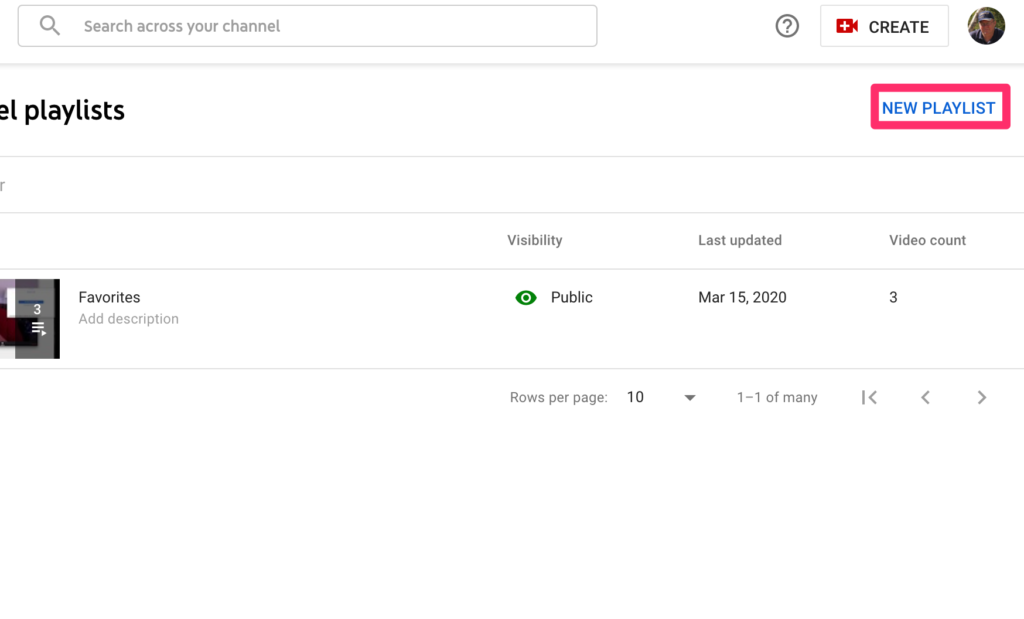
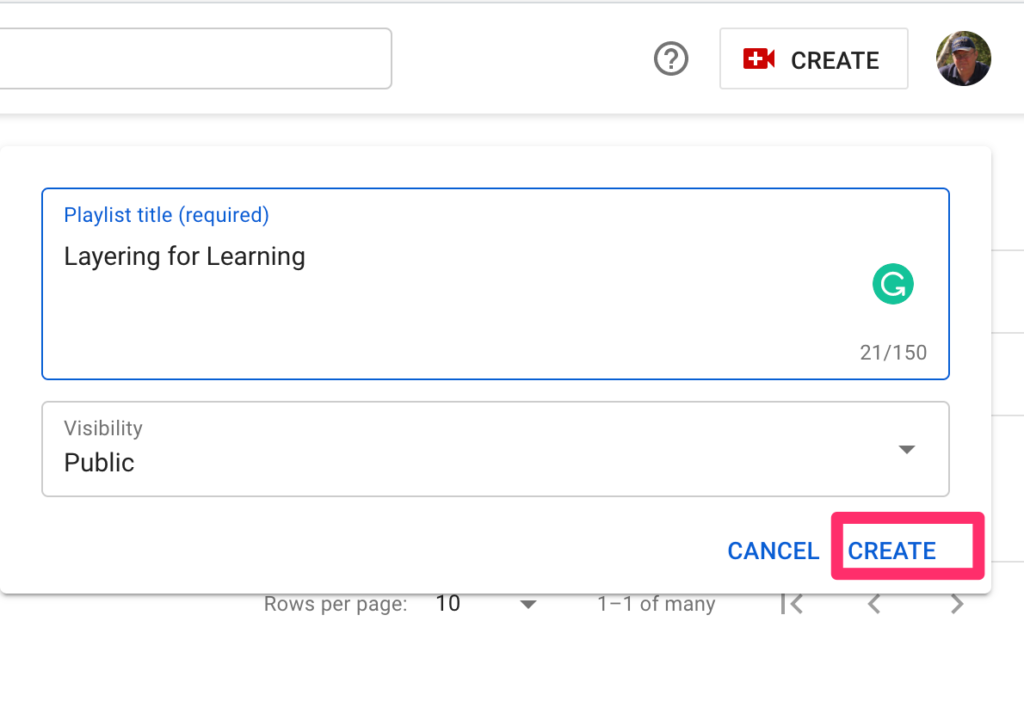
Educators may want to assign a collection of YouTube videos to students for a project or study assignment. This tutorial will explain how this is done and relies mostly on a series of images.

I see this process in three stages – create a playlist, add videos to the playlist, share the playlist with a specific audience. The process works a little differently depending on whether you want to use videos you have created or videos created by others.

Stages 1 and 2 using videos created by others.

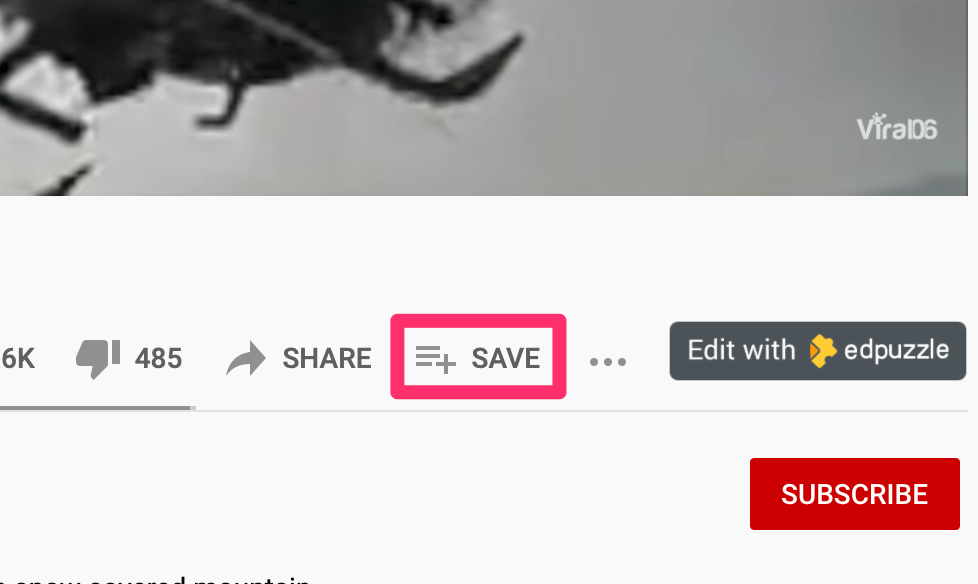
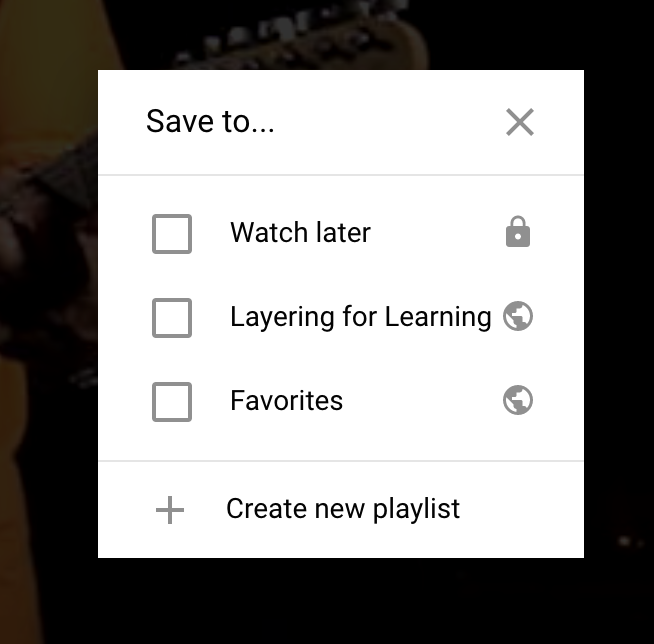
Beneath a video from another source, you will find this save icon. The save icon brings up the option of adding to an existing playlist or creating a new playlist. You would first create a new playlist with a video you wanted to use and then continue to add additional videos. The order of selection can be modified at a later stage so you don’t have to worry about the order when first creating the list.
Working with your own videos or a mix of content from your own creations and existing videos seems to work a little differently. To create the list and add your own creations, work through the YouTube Studio.
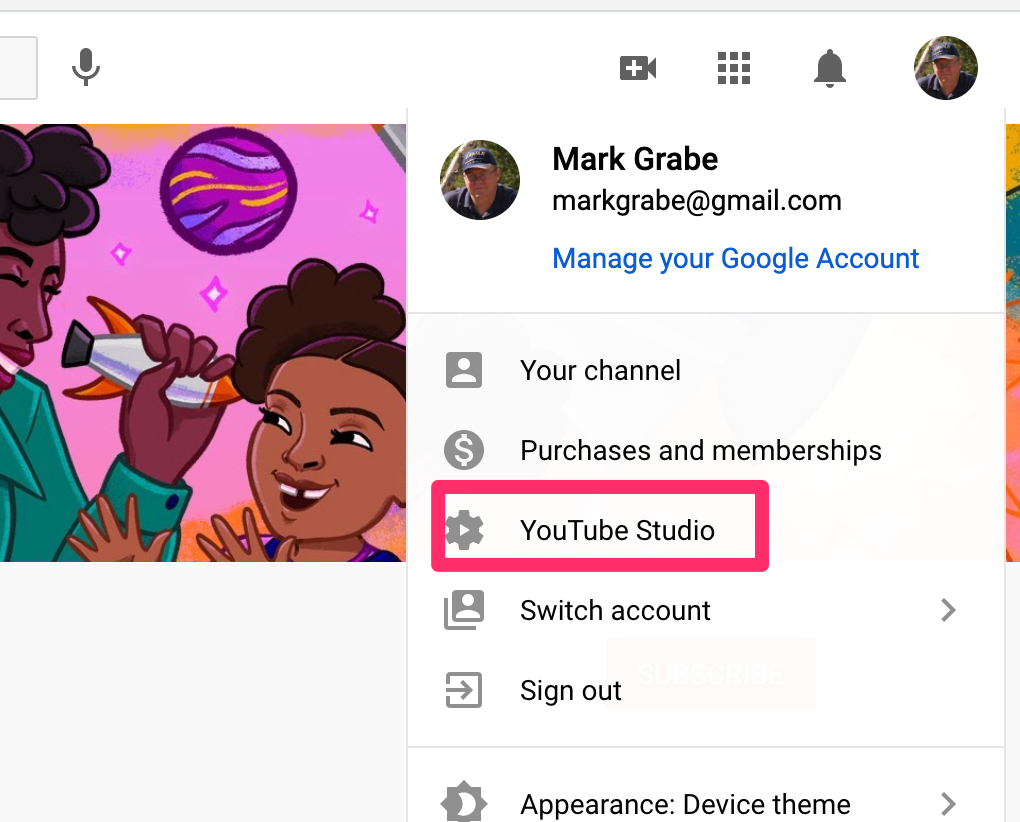
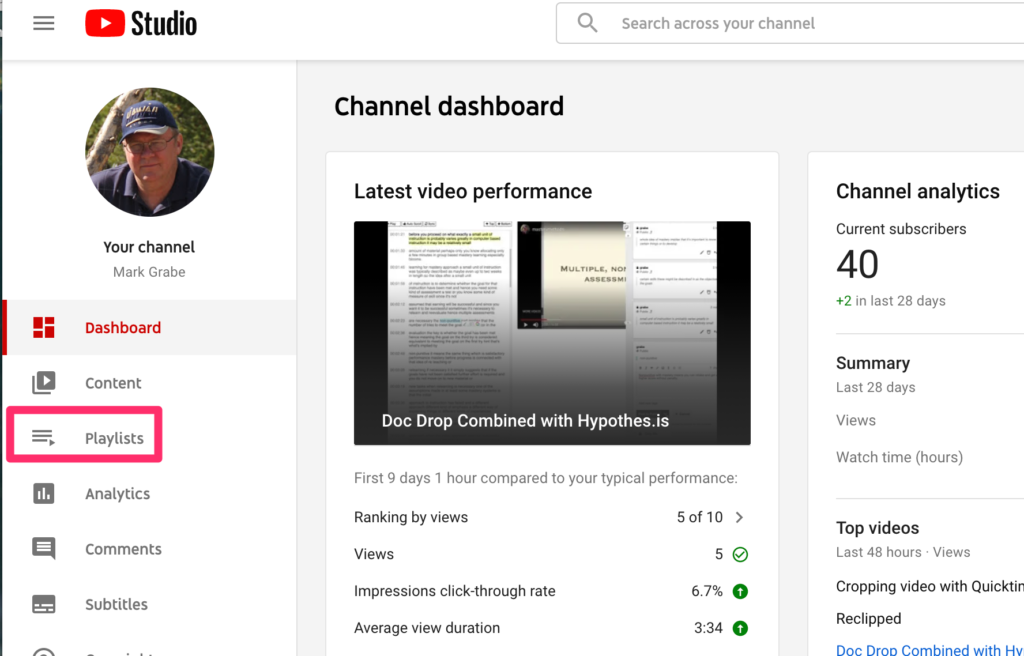
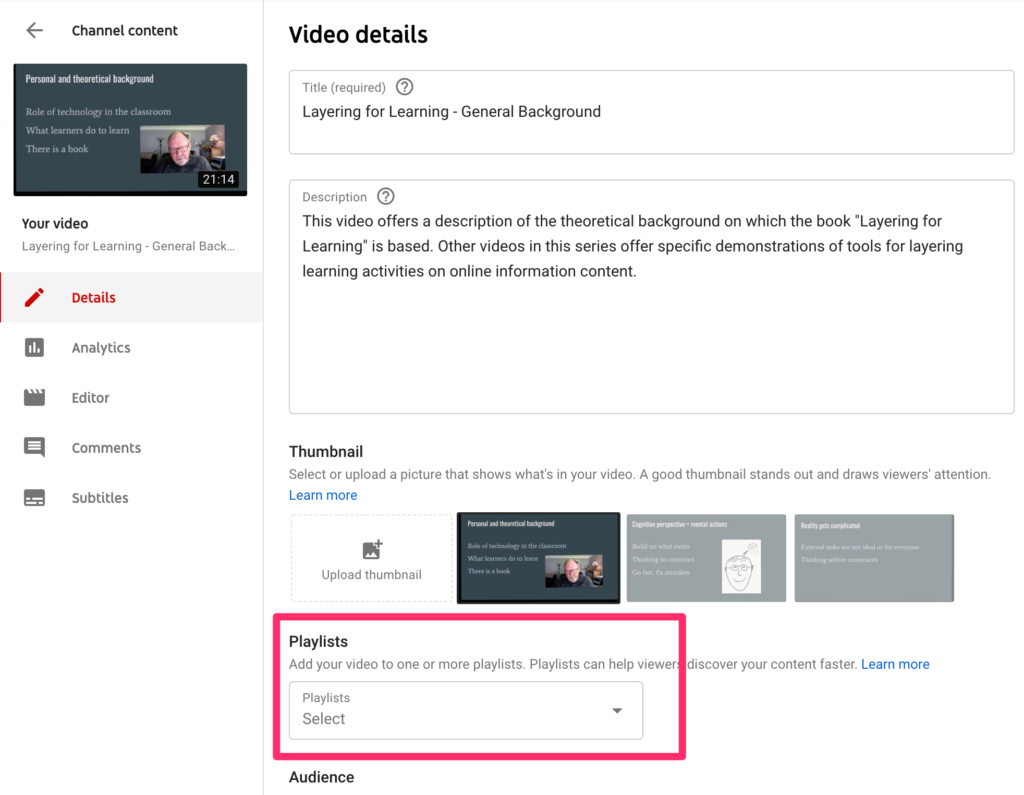
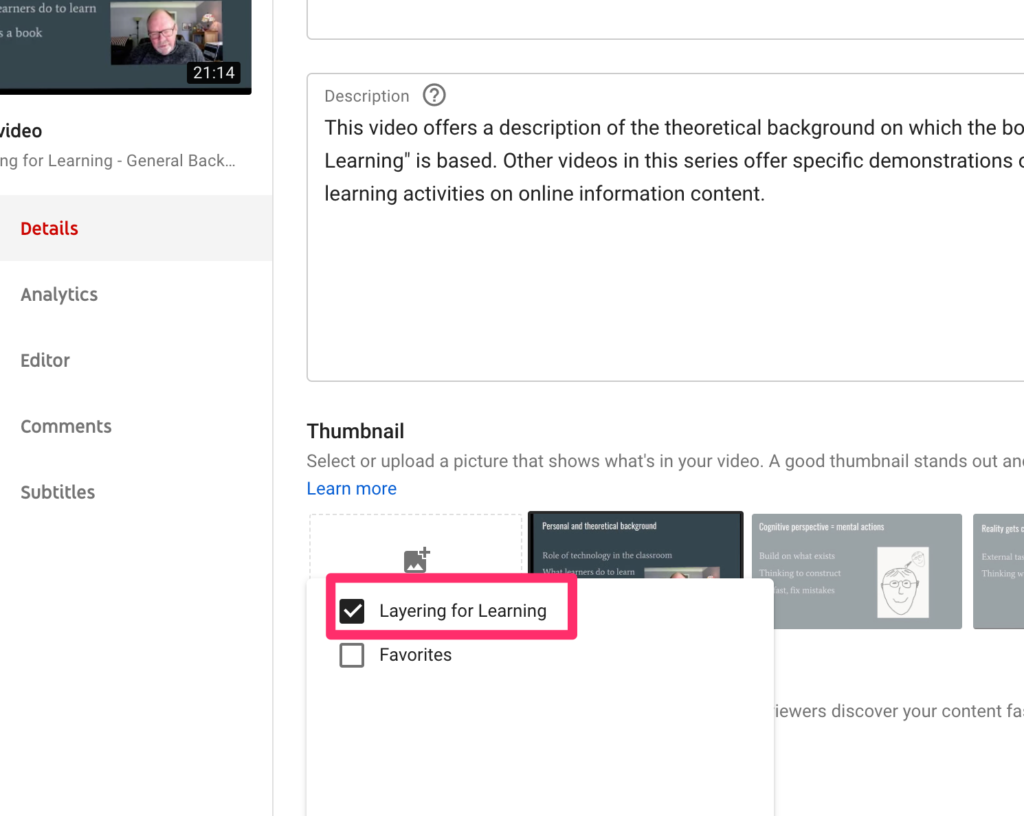
Within the Studio, you can then identify a video you have created to be added, open the video as if to edit, and then use the playlist feature to add to an existing playlist.
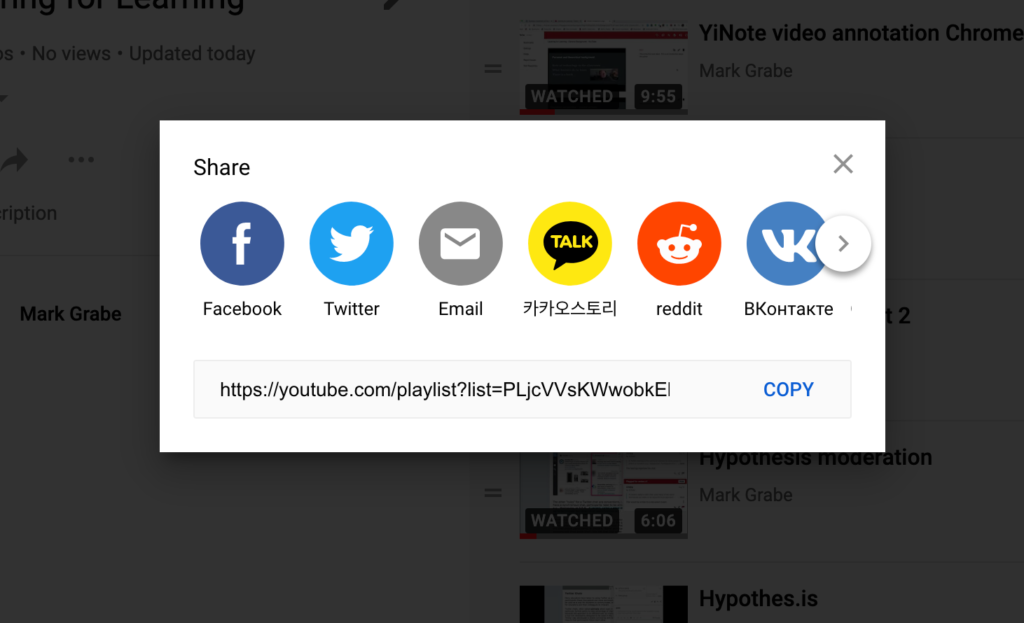
The final step is to share the list with students. Note in this image the share button (left) and the list of selected videos on the right. A key feature of this list of videos is the opportunity to reorder the videos. You drag the video with the small parallel lines icon to change the position. The share icon offers the opportunity to share to various outlets or allows the copying of the URL for sharing with specific individuals.
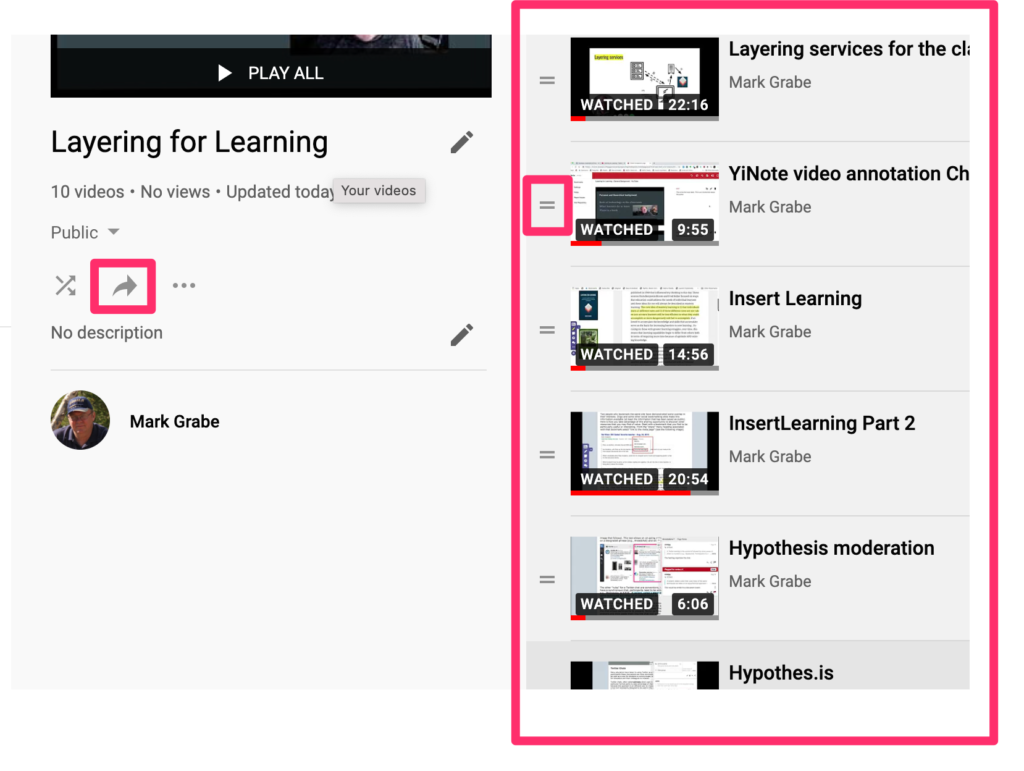
A sample playlist focused on my own efforts to explain Layering services was created using this process.


Loading

Battling Online Toxicity

We have learned that social media can be very inappropriate. While the promise of interaction for greater understanding is certainly there, the negativity of such interaction seems to have destroyed this opportunity leading to the expectations of many that political pressure must be put on social media services.

There may be an alternative. The idea of middleware proposes that a technology fix can be positioned between the user and the service. This concept is explained in this article from the Wall Street Journal. While the article describes the potential and approach in some depth, it lacks specific examples.

Work is underway on at least one approach. Jigsaw, a group associated with Google, has been working on the development of Perspective which proposes the use of AI to develop an API to screen comments before they are sent or before they are read. The link provides an explanation and an opportunity to test a comment you might send. Research has demonstrated that users will often make modifications in reaction to what are called nudges. The proposal is that such technology could be incorporated by social services, but also function as middleware.

While this technology exists and is being refined, you can already use a version of what is now available. Tune is a chrome extension you can add to screen comments you would be exposed to through several social media platforms.

Toxicity middleware may be coming to school technology equipment in the near future.

Loading

Thinking of a warmer place

This has been a very different winter for us. Since retirement, we have traveled during the worst months of the Minnesota winter and that is not possible this year. Temperatures that have reached -20+ this past week have eliminated most of our outdoor activity and being confined to the house gets old very quickly. I have decided to think warm even if I can’t experience warm.

In the summer of 2019, we were able to travel to southern Africa and among all of our opportunities to travel this had to be the most unique. We were familiar with the political history of South Africa because we have a good friend from there we have known for years. I have long been a fan of the music and incorporate the unique sounds into my regular playlists. Being there was all that we had imagined and more.

One of the things we did for ourselves and for others was to share some of the stories and pictures. On this cold day in Minnesota, I decided I would offer access to my annotated collection of African wildlife. I created a free to use collection of images as a Flickr album. The images are identified and a link to Wikipedia or some other source is provided for each image should you or a student additional information.

Images from southern Africa 


Loading

DocDrop + Hypothes.is

I have not generated a post about layering for some time. I found a description of DocDrop and thought it provided a great example of how the concept of layering could be applied to the study of video.

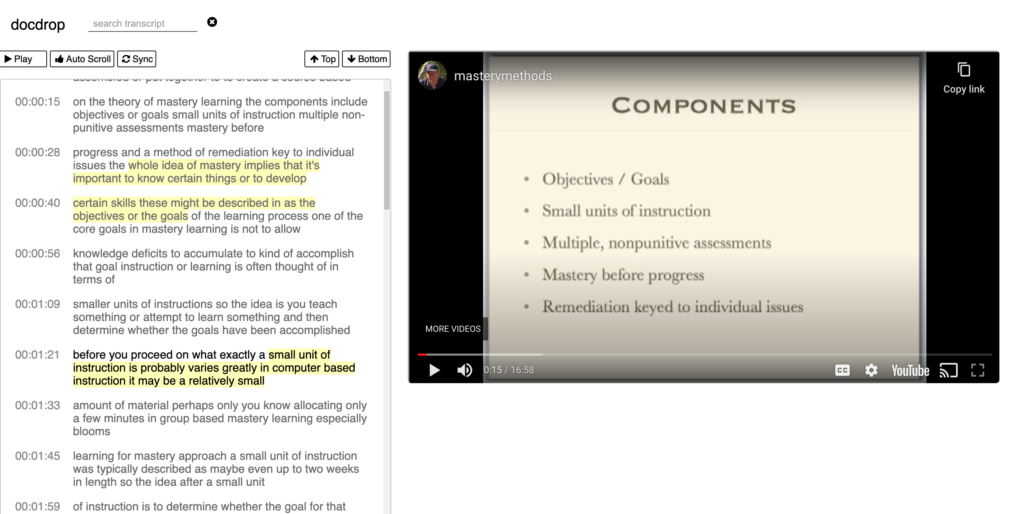
DocDrop is a service that allows the simultaneous display of a YouTube video and the associated text normally displayed as closed captions.

This dual display alone may have value, but it is the integration of DocDrop and Hypothes.is that offers the opportunity for educators and learners I see as having the greatest potential. Hypothes.is was the first layering system I explored and the first I used in a class. It allows the personal or collaborative annotation (highlighting, notes) of text content. I see the value here as a way to improve the processing of text for learning and retention.

Now, the following is a demonstration of the possibility of combining of DocDrop and Hypothes.is.

If this video interests you, I was not focused in the demo on explaining Hypothes.is. The following video was generated a couple of years ago to explain the use of Hypothes.is.

Loading

Joplin – Impressive

I have tried many note-taking and note-keeping systems and I pay for Evernote which I think is assumed to be the best. I use such systems to collect content I eventually want to turn into blog posts. The way this works – search, notes, review and annotate, write – is described as a work flow by many.

Taking text notes is not that much of a challenge and most operating systems come with tools that allow the entry (keyboard or cut and paste) of content. It would be easy enough to keep a note file in Google Drive to take and access notes across devices. The feature I really want is often called a web clipper. This is an extension that allows one to collect content to be stored in the note system while viewing with a browser. Not all note-taking systems have a web clipper that works really well. This has probably been the primary reason I like Evernote – multiple notebooks, cross-platform, web clipper, highlighting and annotation.

I just became aware of an open source note taking and web clipper that comes very close to Evernote in functionality (everything I mention above without the highlighting and annotation). This is a great option for those on a budget (not cost, but a donation would be nice.

Joplin is described in this web page. Follow the instructions for downloading the app and for adding the web clipper.

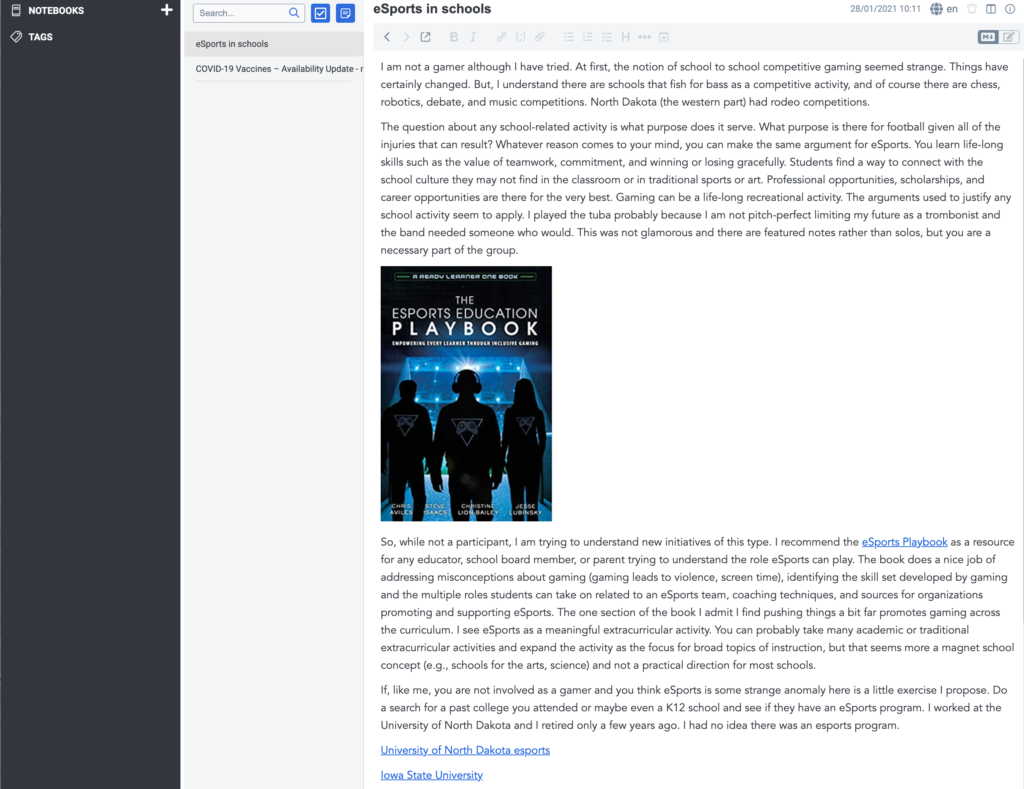
Joplin is a stand-alone application you run on your computer or device. It consists of multiple panels allowing access to multiple notebooks, titles for items stored within a notebook, and the full item.

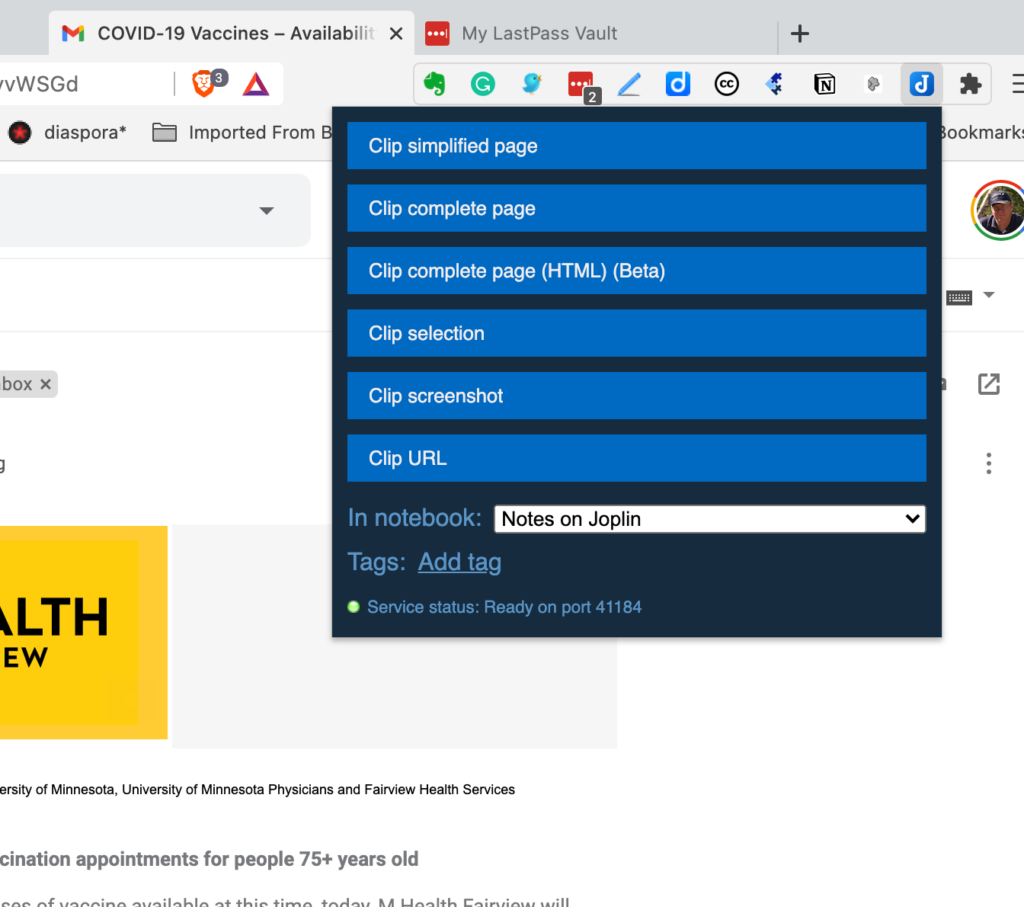
This image should offer insight into what the installed web clipper looks like. When you have access a web page you want to store, you select the menubar Joplin icon which activates a drop-down menu. You select the options want to use – everything from the complete page to just the URL and then clip.

Loading

Paradox of abundance

Essayist David Perrell has written a post arguing that the abundance of information offers a great opportunity for a few, but a significant problem for many. He calls this position the paradox of abundance and uses the metaphor of abundant food as a parallel providing possible insights.

As I understand the logic of this parallel (starting from the challenges of abundant food), human evolution has lagged significantly beyond the technology of modern agriculture and prepared foods. Biologically, we are not “programmed” to deal with an abundance of food especially the great variety of food not necessarily ideal for consumption. The more primitive drive encouraging consume when you can have not yet adapted to abundance. He also references a finance argument called Greshman’s Law familiar to many which suggests that bad money drives out good. I interpret this to mean, in this case, that cheap poor quality food that tastes good will be particularly attractive. For those who are discriminant consumers and Perrell suggests who prepare their own food from scratch, the abundance of quantity and quality is of great benefit. For the greater number who pay less attention to food quality and rely on purchased and at least partly prepared food, the abundance of low-quality food has led to many problems.

The essayist sees a similar situation with information. We clearly have an abundance of information varying greatly in quality including content purposefully generated to mislead and confuse. Free access allows discriminating consumers to benefit greatly, but those with less skill or those making less effort will likely encounter poor quality content. The poor quality drives out good is used to explain the penchant to consume simplistic explanations for complex things and to be drawn to emotion-inducing content. The author proposes the benefits of focusing efforts to assist through curation. He also argues the benefits of writing much in the same way to sees benefits in cooking from scratch.

I encourage reading of this essay as an interesting way to think about an obvious issue. In general, reasoning from metaphor is not a strong approach, but I can see the logic in the comparison. Describing a problem in an interesting and innovative way does not necessarily mean the core causes have now been identified and can be addressed. What about the recommendations – make use of the recommendations of trusted curators and write yourself are consistent with my own biases, but I would be challenged to offer data in support. At a more general level, writing forces extended processing and requires metacognition evaluation through translation that provides some advantages.

I don’t think it likely we will escape from the abundance of food or content. This is a consequence of the capitalism we endorse and once opportunities exist it becomes difficult to go back.

Loading

eSports in schools

I am not a gamer although I have tried. At first, the notion of school to school competitive gaming seemed strange. Things have certainly changed. But, I understand there are schools that fish for bass as a competitive activity, and of course there are chess, robotics, debate, and music competitions. North Dakota (the western part) had rodeo competitions.

The question about any school-related activity is what purpose does it serve. What purpose is there for football given all of the injuries that can result? Whatever reason comes to your mind, you can make the same argument for eSports. You learn life-long skills such as the value of teamwork, commitment, and winning or losing gracefully. Students find a way to connect with the school culture they may not find in the classroom or in traditional sports or art. Professional opportunities, scholarships, and career opportunities are there for the very best. Gaming can be a life-long recreational activity. The arguments used to justify any school activity seem to apply. I played the tuba probably because I am not pitch-perfect limiting my future as a trombonist and the band needed someone who would. This was not glamorous and there are featured notes rather than solos, but you are a necessary part of the group.

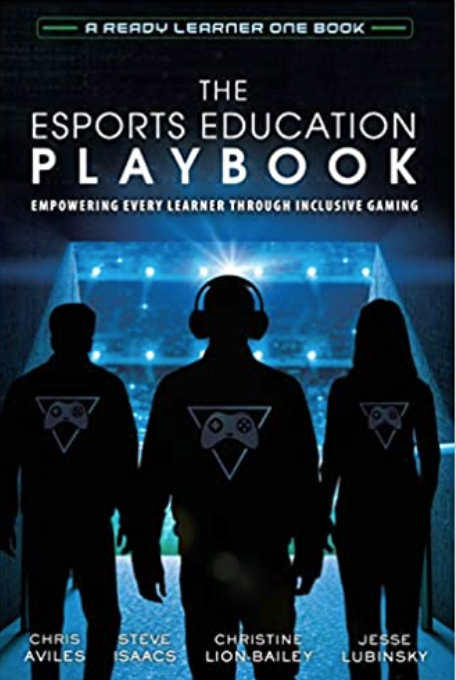
So, while not a participant, I am trying to understand new initiatives of this type. I recommend the eSports Playbook as a resource for any educator, school board member, or parent trying to understand the role eSports can play. The book does a nice job of addressing misconceptions about gaming (gaming leads to violence, screen time), identifying the skill set developed by gaming and the multiple roles students can take on related to an eSports team, coaching techniques, and sources for organizations promoting and supporting eSports. The one section of the book I admit I find pushing things a bit far promotes gaming across the curriculum. I see eSports as a meaningful extracurricular activity. You can probably take many academic or traditional extracurricular activities and expand the activity as the focus for broad topics of instruction, but that seems more a magnet school concept (e.g., schools for the arts, science) and not a practical direction for most schools.

If, like me, you are not involved as a gamer and you think eSports is some strange anomaly here is a little exercise I propose. Do a search for a past college you attended or maybe even a K12 school and see if they have an eSports program. I worked at the University of North Dakota and I retired only a few years ago. I had no idea there was an esports program.

University of North Dakota esports

Iowa State University

Loading