iPad iPhoto Journals

The issue of whether the iPad is a meaningful production device is important to many educators. The issue comes up when making the decision whether to invest school money in traditional computers or iPads (and similar devices). Traditional computers, laptops or netbooks, are versatile and the capacity to write and create multimedia as a learning experience is obviously available. The touch interface of the iPad and an operating system that works a little differently when it comes to storing and integrating media elements is unfamiliar to those of us who have a more traditional background and may have originally seemed a barrier to content production.

Apple and those who develop apps are obviously attempting to move users toward a different way of doing things. iPhoto on the iPad, a new offering, is different from iPhoto on a computer and may serve different purposes. For example, one of the cameras I use takes images that are large and it would not be practical to store thousands of these images on an iPad. I use my desktop machine to store images and upload many to Flickr.  I can download images from Flickr to the iPad to take advantage of the interesting ways you can edit images using iPhoto for the iPad. I am also exploring the potential of iPhoto (on the iPad) as a way to produce content – what Apple calls “journals” in this case.

I must say that creating an iPhoto journal reminds me of the old iWeb which I thought was a useful produce/service for those who wanted a web site that looked more sophisticated than the time and background of many would allow. iPhoto Journal is obviously more image oriented because it is tied into iPhoto, but it offers the user widgets that pull in things like maps, date, and text boxes to a “collage”-like display. I can see teachers working with their students to create a journal as a final project product.

Screen capture from iPad

Here is a link to a sample product I created available via iCloud. I must say that I struggled some to arrange the objects to position them exactly where I wanted and I do not have the experience to know why. I was working on my iPad 2 and it is very possible this would work more smoothly on the new iPad. it is also possible that iPhoto for the iPad is a 1.0 product and refinements will come. In my opinion, Apple has a mixed history developing such products (e.g., iWeb and mobile me). However, the company is going to have focus in this area or be more accepting of opening up to those more focused on cloud services.

Here is a CNET review for a second take.


Loading

What claim are you disputing?

Most folks who read this blog probably are aware of the story of  Salman Kahn  and the Kahn Academy. The TED talk version of the story with my embellishments follows – so Kahn, a hedge fund manager, begins creating short YouTube videos to tutor his nephews who are struggling with math. Others stumble across this content, find it quite helpful, and encourage Kahn. The viral avalanche continues, money people such as Bill Gates notice and contribute, and Salman ends up with an online success.

Some object. Just what is the focus of the concerns. Salman did not begin to subvert teachers or their role. He began because kids were not getting it based on their classroom experiences. To my knowledge, no claims were made about the teachers. Kahn is obviously very bright and entertaining. I think the style ends up being repetitive, but I also understand the research on worked examples and would suggest that at least the math content fits within this approach.

Kahn does have a more complex model than I think most realize – take a look at the site and you will find the videos (now in many content areas), problems to work, and opportunities to volunteer to be a coach. So, if you are critical based on some notion that this is about replacing humans with video, click the volunteer button and be a human.

The Kahn video content has become somehow mixed together with the “flip the classroom” movement. Students could prepare from watching video and then come to class prepared to discuss, request help, etc. I suppose video could be used in this fashion.

Perhaps the point is that these are just resources and tools. There is the opportunity for flexibility here. You are not paying for an approach that locks you into a given strategy. Wait – come to think, you are not paying at all. No one is after your job. You are in control. Make your own video content students can use when they are at home attempting to complete the problems you assigned. Too much work?

There is this online site that offers video content some students find helpful (but this is where I began)

Loading

Cloud Competition

Is it possible we are in the midst of a round of competition to attract customers to cloud storage? First I see that Box.net is offering Android Users free 50 gigabytes of storage (deal ends in about a month). I am still running a server with less storage capacity.

This afternoon I see that DropBox is expanding services to include the potential for automatic photo uploads from your phone. I immediately ran outside into the early stages of a full blizzard and took some pics. By the time I got back to my office, the images were not only uploaded to the cloud, but synched down to a folder on my desktop. I immediately turned this feature off on my phone because I am not certain I want all of my photos uploaded, but it certainly nice to know the feature is there. DropBox promises 3 additional free gigs for photos.

So, from my camera to the cloud to my desktop and now to you in less than 15 min.

You can share these images by moving them to the Public folder and then requesting the link (example) for each. You can share images from the Camera Upload folder with other DropBox users.

Loading

Takeout

I do my professional writing in Google docs. Using a cloud service allows me the flexibility of working from any location using pretty much whatever equipment I have available. I also trust Google storage more than I trust my own storage. I am betting my equipment and backup behavior is less reliable than the equivalent Google equipment and conscientiousness.

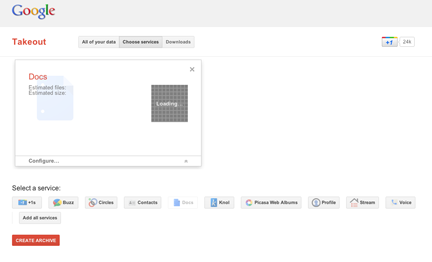
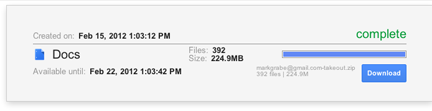
Google wants to make certain I have options. Actually, I think the concern is more that I could be able to leave Google and move on to other services if I want, but the access opportunities work out the same no matter what the motivation. There have been several options, but I just encountered a new approach that seems built in (Google TakeOut). I just made a backup of several hundred doc files and moved them to a local backup drive.

Easy peasy (or whatever the expression for it is not difficult is).


Loading

Policy change for Google +

TechCrunch reports that Google + will now be available to anyone eligible for an account – anyone 13 and over. Google has added some new features which are age dependent. It reminds teens when they are posting to “public” and automatically removes them from a video hangout when an adult enters. This sounds like a nice feature but it would also limit tool value in an educational setting. Google could certainly modify this feature if Google + was used as part of Apps for Education.

We have created Google + tutorials for educators.

Loading

New publishing model?

The promise of low price ($15) multimedia textbooks may seem right around the corner, but I wonder. My wife and I have been participants in the industry for 5 editions (Integrating Technology for Meaningful Learning). We have split from Cengage over what the book of the future might look like. We have been working for a couple of years on a concept that would drastically downsize the “book” book into a Primer and move content best provided on the web to the web. Seemed like a great idea to us – what sense does it make to argue that teachers should engage their students with technology from a book?

Here was a major concern. A good proportion of the online content was intended to be tutorials, project examples, etc. With so many great online tools available, why not generate tutorials for the tools and then encourage the future teachers to work with these tools. Locating such examples and tutorials online already is pretty easy. Why not offer something more and organize similar content and tie it together with a rationale and related issues teachers need to consider? It appears that one of the major issues is permissions. We expected the publisher to take care of this. How could we? It is not that companies producing the tools we describe would be concerned. You write about and explain how to use the products you want to convince teachers to use. Free promotion. You complain about things in blog posts. The issue is really the time to access the necessary parties. Lawyer time is expensive and the margin on what has long been a successful book in a small market is not enough.

We may still do the Primer – we wrote that material so we know the text is ours. We may offer the online material to any interested educator as a non-commercial resource like all of the other free online stuff. However, a “text” book full of text and a few images is certainly not what the Apple folks offered as a demo. For that, you need a large and expensive group generating the content or you have the lawyers to worry about the permissions.

Many who assume the Apple announcement is a dream for self-publishers and small publishing companies may think my reaction, while based on experience with a major publishing company, is unique or extreme. I quote a very similar description from another experienced writer below.

 But it is important to realise one thing: if you are going to make a textbook look pretty you need pictures and where are they going to come from? Take it from me, using a picture in a textbook is a big copyright deal and a big pain in the neck. How would a self-publisher organise the permissions? It really takes a big chunk out of the transaction efficiency Apple is providing. The publishers know that this alone will protect them from that competition unless, of course, an easy to access repository becomes available (and it may already be except I don’t know about it).

My concern is the bar for embedded video, interactive multimedia games and tasks, music, etc. will actually be too costly for most companies at the $15 price point. Note that Apple is not taking the risk here – they fund a couple of demo projects, but the publishing companies must meet this price point, pay for the embedded media, and give Apple a generous cut. Apple was able to position the music industry in a similar situation and they participated. I do see the price is creeping up to $1.29 now. Amazon provides a worthy counter weight, but new tunes are no longer 99 cents.

I think the $15 price point is great. It makes some sense that the cost should go down because the closed environment of the iPad means you cannot pass your $15 book on. Still I would think this would translate to about  $45 if I understand the resale frequency of college textbooks. There are few $45 textbooks now on the market and these books are the target because of lack of “informative” multimedia. If the $15 book of the type displayed works, it will have to be on volume and this will mean few publishers will remain. Companies such as Pearson are betting big and getting in early just like they did with standardized tests. Perhaps this is a stock recommendation – your call.

Loading

Lecture?

Classes begin again on Monday. Wednesday I lecture to 200 students. We teach many of these large courses. Providing instruction to large numbers of students who are required to take our “service” courses is expected of our department and there is no practical way to handle this demand without meeting in large groups. What is under dispute, if I understand the “new” critics, is what should happen when these large numbers of students meet.

First, there have been variations on what is described as “flipping the classroom”. This may mean different things to different people, but I take it to mean that students should first encounter “information” before coming to class (read the book, watch an online video) and then spend class time “discussing” what they have learned (or not) with the instructor. There are certainly many sources for “recorded” lectures with many institutions offering their lecture content online and many ways for any of us to record and post content.

A recent and it would appear related ripple swept through the online circles many of us are part of because of an NPR spot based on the method of a Harvard physics instructor (Eric Mazur). The concern in this case seems to be that physics students have focused on the procedural methods to solve required problems but have not developed conceptual understanding. Mazur proposes that small groups of students within a large class discuss challenging questions and then report. Again, learn the basics outside of the lecture hall and use the FTF time to discuss under instructor supervision and direction.

I have commented on this general issue previously. Somewhere else in my posts I indicate that the lecture method has long been questioned, indicating that Fred Keller in 1968 authored a paper titled “Goodbye teacher” again arguing that the lecture was not effective. Keller’s argument was somewhat different suggesting that the lecture was unresponsive to individual needs proposing that “mastery” quizzes, reading material, and tutors provided a more adaptive approach.

I have been trying to think through what I think the underlying mechanisms and problems involved in this discussion might be. I think there may be several. The first issue may be that not enough time is not committed to learning. By expecting students to work with online lecture content outside of class time AND then spend class time processing content, the time devoted to learning is increased.

The concern that the presentation of content does not encourage “deep understanding” seems different. Posing challenging questions can certainly be part of any presentation so the key addition in the Mazur method would seem to be the small group discussion. Somehow, this approach assumes that background knowledge is acquired without presentation or at least with far less time devoted to presentation (I suppose from the textbook) and the time previously allocated for explanation or the presentation of unique information is better spent by engaging students in discussion.

There are many issues to parse here and perhaps different ways to respond if the key issues and benefits can be identified. I wonder if the content area matters. I would bet the “concept density” among classes varies greatly with, for example, physics introducing far fewer concepts than say Intro psych, but introducing concepts that may be more difficult for students. I would have predicted that the procedural skills (problem solving) involved in what I thought happened in physics classes was the most difficult challenge for students. Perhaps when the time required to describe concepts is brief but the abstractness of the concepts difficult to penetrate, discussion or some form of grappling with the “big ideas” would be a more productive use of time. When the number of concepts is large, but based in conceptual models that can be easily interpreted, then class time might best be spent presenting these concepts with basic explanations.

I also wonder about the motivational issue. For example, would it be even more efficient to provide students conceptual challenges to discuss before or after more traditional classes. Do students need to have the instructor in the same room to engage in group discussion? What has happened to the concept of students organizing “study groups”? Is it possible that requiring discussion during class time is a way to assure that discussion happens?

BTW – our Intro Psych classes do set aside time for “discussion”. In our Intro classes, we lecture twice a week and students meet in smaller groups with a graduate student group leader once a week. This seems a compromise approach that has been in place for generations and seems reasonable if my interpretation of the content area I address as expecting that students deal with a large number of relatively easy to comprehend concepts is accurate.

Loading