Brave Update

I have written about my interest in the Brave browser and ecosystem several times. It is not my interest here to repeat my previous comments and I would refer those interested in a complete description and more information about how to use the ecosystem to this post from the Mercury News [https://www.mercurynews.com/2019/07/26/magid-2/amp/]. You can certainly use the search box available through this blog to find some of my previous posts.

I am writing again because Brave has addressed one of the concerns I have expressed previously. A quick description is necessary to explain what I think has been improved. Brave offers both a way to block the collection of personal information intended to focus the later display of ads AND a way to subsidize content providers when the ads that might provide them a small source of revenue with income are blocked. My complaint was that users of Brave could block ads, but not make the effort to contribute money to compensate content creators. It was complicated to contribute money because you have to offer funds and make the effort to convert these funds into a type of cryptocurrency. It was challenging enough to do this to discourage non-geeks to make the effort.

What Brave has changed is to provide users of the browser to view ads through Brave to generate revenue for themselves. This provides a way to accumulate income within the ecosystem that can be accessed by the user (I think), but can also be used to compensate content producers. I have no idea how many take advantage of each option, but Brave makes the effort to encourage sharing with content producers and for now this seems a move forward.

My story is this. I originally figured out how I could convert money into BAT (the cryptocurrency) and added $50. Strangely, I got in early and the value of this stake increased to nearly $100 as a function of the fluctuation of the value of BAT. I allocated 20 BAT a month to be distributed among the various sites I visit and view without ads. I also enrolled by site (https://learningaloud.com) so my resources were authenticated within the Brave ecosystem. I do have ads on some of my content, but I receive very little in revenue. I make the effort because I am curious about how this all works. For example, I know that about 20% of those who visit my site block the ads. This seriously underestimates exposure to ads as those who use a cell phone to view responsive content do not see the side bar which is where my ads are positioned. I estimate that less than 20% of views actually contain an ad.
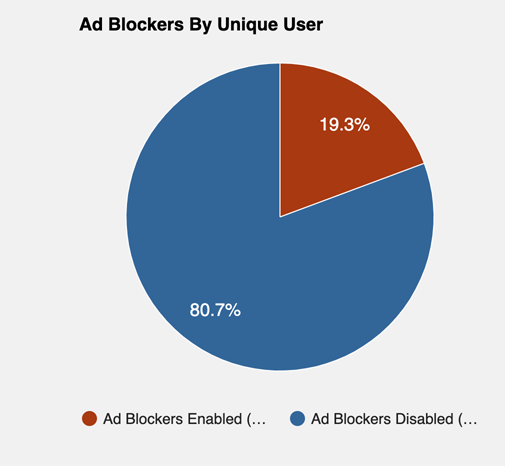
I have had enough experience now with Brave to make some observations. I set my interest in viewing ads at two per hour. One limitation of the present version of Brave is that the data from multiple devices is not combined and iOS is not included in ad revenue generation. I generate personal ad revenue only when working on my desktop machine.
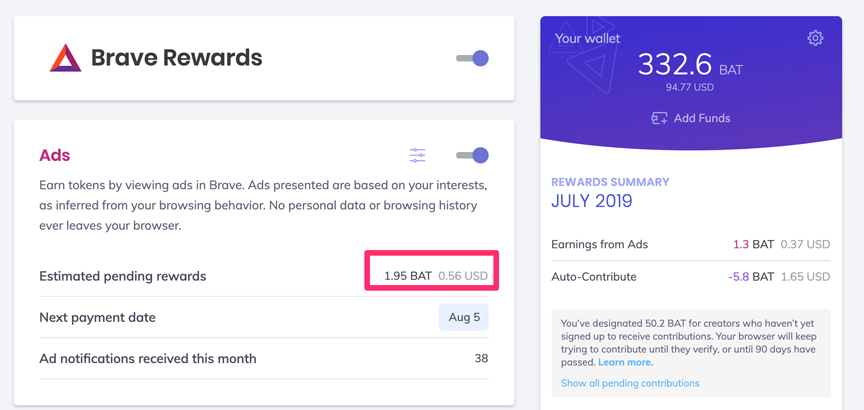
So, I am writing this on July 29 and you can see how much revenue I have generated from viewing Brave ads (56 cents or 1.95 BAT). With less than a week less in the month, you can kind of estimate how much I presently generate in a month. Again, I contribute 20 BAT per month.

You can participate in the Brave program without actually putting any of your money into the system. You can also accumulate BAT by accepting Brave ads. I interpret Brave to suggest that if you accept BAT for viewing ads, you should spend some of your income in support of those who are content creators. At least this is a start.

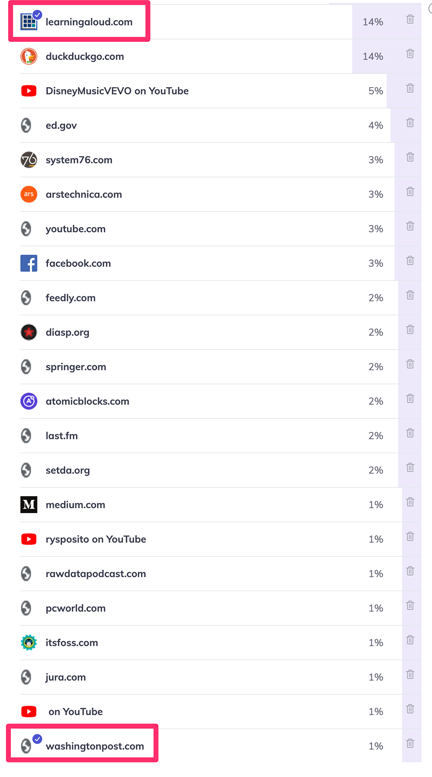
Here is one issue. Few content and service providers have made the effort to register with Brave. Registration is important in supporting this innovation and I urge everyone who falls into the category of content creator to make this effort. In the following image, I captured as much as I could from my screen. You see the gap between the list of sites I have visited and how few are registered. Yes, I end up paying myself, but this is a function of the sites I work on.
Loading

Pearson’s bold proposal

Pearson, the academic publishing company, has announced that it intends a very different future direction. Pearson is making a bold bet that educational resources for higher education will go digital and will eventually offer learning resources involving elements not presently part of even digital books.

Pearson describes what it is embarking on as a “digital first” approach. At the most basic level, this approach will allow updates and modifications to be made in an on-going fashion rather than once in every textbook revision cycle (3 or more years). Pearson projects that a digital approach will allow textbooks to be sold for $40. There are substantial cost savings in materials, printing, and shipping for a digital product, but perhaps the most significant advantage to a company comes from the elimination of the resale market. My experience with the resale issue translates as students sell a book to be used in a subsequent semester back to the bookstore at 50% of the sticker price and the bookstore resells the book for 75%. See my somewhat cynical description of this as the “beer money ploy” (students don’t tell parents they sold their books and use the income for spending money). A new industry has been created to serve a similar resale function. Off-campus services buy books, pay for transportation, and then resell books online. I guess competition is good and essential when a prof decides not to use a book the next time a course is offered. Again, I know from experience that profs are “encouraged” to stick with their books to keep the money local and prices to students low.

As a textbook author, I have a little different perspective (not always understood by the consumer). Authors and textbook companies make their money on the initial sale and drastically less once used books are available to compete with the sale of a new book. I assume this reality is figured into the initial cost and some cynically believe a motive for a company to push the newest books when making recommendations to faculty members. A different way to look at the same situation not explained when people criticize the initial cost of a textbook is that this amount of money is all the publisher and author(s) will ever get even though that book is likely resold two times. The actual initial cost to the student ends up being half of what the price at purchase time says. It is the book stores that make the easy money. All they have to do is put the used book back on the shelf.

Anyway, my understanding of the initial Pearson approach is that it is very similar to how we proposed modifying our Cengage textbook 5 or so years ago. I was becoming frustrated with the three-year revision cycle not allowing involvement for 2.5 years or so and then after getting approval for another edition having to sprint to finish in three or four months. This is not an ideal approach for conducting thorough research to make changes to a wide variety of topics. After creating 5 editions, I argued that the quality of our work could be trusted so it made more sense for us and for the learner to write continuously. New updates could be placed online immediately and then worked into the next edition if a normal cycle was maintained. In addition, we proposed scaling down the “book” to a core of information least likely to change. Note that technology moves rapidly and it made sense to us not to describe the classroom application of a program or service online rather than in the book. In one case we experience, such a description in our book was actually discontinued by the time a new edition was put in the hands of students. We wanted this shorter Primer to be sold for $29 dollars supported by free access to assorted online content organized to augment and keep current the chapters in the Primer. We went back forth for 5 years long after our existing edition should still have been on the market. We eventually settled on getting our copyright back and did what we proposed generating a $9 Kindle book competing against our own dated Cengage edition still being sold for $140. I guess that with innovations the timing of an idea is everything. Pearson could have piloted what they now propose five years ago had we been working with them.

If anything about our efforts to change the textbook model seems interesting, use the book tag associated with this post to locate multiple posts now buried early in this blog.

In one of those weird coincidences we all sometimes experience, we were having dinner with a former grad student the night before the Pearson announcements began popping up. He happens to be a senior design researcher with Pearson (the only person I think I know working for Pearson) and he was describing their new initiative.

He indicated that even more innovations may be coming. You only get a hint of this from the EdSurge description. He works with research tools tracking learner engagement with content (e.g., eye tracking, changes in posture and galvanic skin response) and is trying to understand what seems to be responsible for the greater difficulty learners have remaining active when reading content from a screen. He proposed that content be prepared according to instructional design principles more likely to be applied in computer based instruction than textbooks. In this approach, content is organized into more focused segments rather than long rambling chapters. Content is supported with clear goals and embedded and perhaps individualized learning supports (a simple example would be inserted questions and perhaps learner selected expanded explanations) are added. Of course these innovations would be far easier to offer with an online delivery system.

Taking the perspective of an author, I wondered what the role of an existing author would be? I taught in an instructional design program so I was familiar with the way designers work with content experts in creating instructional content for what I tend to classify as training – focused skill or knowledge instruction typically outside of formal educational institutions. Would the authors who now write textbooks work with Pearson as content experts under the new model? Too early to tell, First, a more traditional approach providing digital books.

As I think about this possible trend for higher education learning resources, I also wonder about what this would mean for instructors. One way I think about instructional design is that it moves some functions provided by a face to face educator to the learning content. A teacher can establish goals or goals can be embedded in content. An instructor can ask questions to guide cognition or questions can be embedded in content. An instructor can respond to individual students with additional explanations and personalization examples or content can be expanded to offer learners the opportunity to consider extended explanations or select from multiple examples. Moving teacher functions to content is not ideal, but the traditional approach of a teachers trying to meet the differing needs of a large group of students is also not ideal.

In the K12 environment, self-paced learning allowing learners to work through designed content at different rates depending on differences in understanding is often criticized using the image of a room full of students working on computers while the teacher sits at a desk making certain discipline is maintained. This should be a stereotype, but it probably does happen. The ideal model would be for the teacher to move about helping individual students in a way not possible with group-based instruction. Still, given the reaction by some in K12, how do you think profs would react to more highly designed material?

Loading

Worksheet?

Some education pundits use “worksheet” as a derogatory term. I assume their complaint is the equivalent of labelling an activity as busy work. I saw this article attacked on Twitte in this way. Some of these complaints seem to originate from a pure discovery perspective which has long been debunked by educational researchers.

My interpretation of the strategy that was attacked was that the strategy was being offered as a type of scaffolding. The concept of scaffolding proposes the use of supports that allow learners to take on tasks they could not attack on their own. These added supports can improve learner motivation and encourage the application of cognitive skills learners might not apply unless prompted. Rather than expect learners to stumble around the idea is to increases the rate of success and the practice of important skills.

Some of my own work focuses on the use of a category of technology services that allow educators to scaffold online content to make the study of this content more successful for learners.

Loading

Read laterally or the checklist is not enough

I am in the midst of a book update and am sharing some issues here as I write about them elsewhere. This recommendation is related to the development of online content evaluation skills.

We have long advocated learners being aware of certain characteristics on online content that they should consider to determine the qualify of a resource. Many, including me, have offered a checklist of things to check.

However, bad faith content creators have become more sophisticated making the items to check about a source of less use. Wineberg and colleagues now argue that online content that seems questionable should now be evaluated using the techniques of fact checkers. He describes a productive strategy as lateral reading – open a few extra tabs in your browser and search for additional information related to claims you question. I can see a classroom demonstrated related to this skill making use of a project and after reading a document together open tabs and asking students who issues they wonder about and what search terms they might recommend to cross check.

Mike Caufield offers an online resource with a large section explaining lateral reading strategies.

Loading

Do students cyberbully each other while in school?

I am doing the background research necessary to update our textbook. I see a textbook for preservice and updating educators as a combination of explaining relevant research and classroom characteristics that may expand existing learner experiences and offering suggestions for how this relevant background might be applied.

When you do a review of this type certain things have a tendency of jumping out. One category of such revelations would be those things which seem to represent reversals of what you claimed earlier. If my perception of such seeming reversals is correct, I would be misleading readers if I did not make an adjustment in what I claimed in the previous edition.

Here is a description of once such inconsistency. Like so many educational issues writers have to consider the evidence carefully to sort out what the research actually says. For example, are the methodologies of the studies or the data the cause of what seem to be contradictory findings. Since a textbook is a secondary source involving a great deal of integration and summarization, what is the best way to fairly describe what is known so others can made informed decisions.

Here is an example.

The issue that concerns me concerns cyberbullying and what role schools should play in addressing this problem. When I wrote the last edition of our textbook, I used research from Wolak, Mitchell, and Finkelhor (2007) that provided data on the locations of bullies who were cyberbullying their peers. This study is somewhat dated, but the precise location from which the harassment occurred was precise and relevant. Why? Well, kids likely cyberbully kids they know though school, BUT they were rarely reported as doing so from school. Why does this matter? Issues came up when schools toke actions against the bullies with parents and lawyers claiming that this was not an issue for schools to address. As a consequence, schools could certainly have programs to discuss the general problem, but were reluctant to address specific students who were identified as being involved.

A recent study based on the observations of classroom teachers (Vega & Robb, 2019) seems to make a different claim. The teachers responding to this national survey claimed that they were aware of cyberbullying originating within the school. I quote from this study below.

Approximately one out of 10 teachers (13 percent) said that cyberbullying occurred in their classrooms “frequently” or “very frequently,” and three out of 10 (34 percent) said it occurred at least “occasionally.”

Now, the teacher responses to survey questions are a little difficult to interpret definitively. Did the teachers actually see comments on computers or phones or did they just hear about incidents from their interactions with students. Legally, it probably makes a difference. The Wolak, et. al (2007) asked precisely about location.

Is this distinction worth writing about? I am still trying to decide.

Vega, V., & Robb, M. B. (2019). THE COMMON SENSE CENSUS: INSIDE THE 21ST-CENTURY CLASSROOM. Retrieved from https://www.commonsensemedia.org/sites/default/files/uploads/research/2019-educator-census-inside-the-21st-century-classroom_1.pdf

Wolak, J., Mitchell, K. J., & Finkelhor, D. (2007). Does online harassment constitute bullying? An exploration of online harassment by known peers and online-only contacts. Journal of adolescent health, 41(6), S51-S58.

Loading

Complex things cannot be totally simplified

I consider myself a fairly experienced tech person. I used to make heavy use of tech including running my own server and writing the code necessary to conduct my research. Now, in retirement, I consider myself a tech writer. This background still does not mean all tech projects come easily to me. Such is my present situation.

Given the current state of the online world and our (my wife and myself) heavy involvement, we need to take things seriously. We finally decided to improve our security by purchasing a password manager and moving to more complex passwords. I am still in the process of trying to create a completely successful implementation.

My struggles stem from a couple of things. First, I am an impulsive problem solver. When something doesn’t work, I try something else. I often forget which of several attempts was successful making solving the same problem a second time no easier. Second, I have created for myself a very complex tech environment. Here are the factors that seem to be relevant to my present challenge:

  • Within a couple of weeks, I use 7 different devices (tablets, phone, computers)
  • These devices use multiple operating systems – MacOS, iOS, chrome
  • On these multiple devices I use four different browsers (Chrome, Firefox, Safari, Brave)
  • I have accounts on probably 30 or so online accounts. Some I use frequently and some seldom. Sometimes, I know the login and password and sometimes I do not. I often rely on stored passwords for those accounts I could not enter from memory.

The concept of a password manager is easy enough to understand. You open a service and go to the place to change the password. You create and store a more complex password in the password manager and you copy and paste this new password to the account you want to update and save. You should now be able to use this service by opening the password manager on another device you have installed the password manager on as the password managers share the new passwords you have created.

I have decided the problems I am having are due to the technology trying to be too helpful. Depending how you have set up your operating system and browsers, your passwords can be stored and autofilled. Sometimes this information is stored in multiple places on the same machine and shared across machines. So, your operating system may store this information and a browser on this device may also store the passwords. Changing the password for a site and storing this adjustment in the password manager does not necessarily change the stored passwords on your device. In some cases, I had probably 50 stored passwords associated with a browser. I could possibly delete all and turn off autofill, but my original plan was not to change every password in the password manager partly because I have relied on the stored passwords in various browsers. I hope this makes sense and explains how this process can end up being more complicated than those who promote password managers make it sound.

My present strategy has been to delete specific existing stored information on my devices for the specific sites I want to have more complex passwords. When the new passwords stored by the password manager are then saved and shared among the multiple devices. This process has to be repeated for each browser.

A password manager and complex passwords are good ideas. I certainly encourage you to make the effort. Depending on how complex your own tech world happens to be you may have an easy time making the adjustment or be in for considerable trouble shooting. If you have created something that approximates my own situation, the one suggestion I would offer is to be aware of the multiple ways old passwords may be stored on your devices.

Loading

Think like a practitioner – the generalization of an idea


I would suggest that educators have become familiar with an example of the concept of thinking like a practitioner but may be missing the bigger picture. The example presently in vogue is coding (programming) as in proposing that computational thinking represents a generalizable set of thinking skills (procedural skills) applied by programmers and possibly developed through learning to program at an age/experience appropriate level.

Before schools dive in head first, it might be prudent to explore comparable areas of practice that could develop important knowledge and thinking skills (I like to use the term procedural skills). What would be the most productive and efficient uses of this concept in classroom settings? If time and resources are limited, what types of practice (as in the activity of a category of practitioner) should be prioritized?

Do we have other practitioner experiences in classrooms? I have been thinking about this question for some time. In my thinking, I have found it useful to differentiate knowledge from skills. What is it a programmer knows? What is it a programmer has to do to program? Substitute a different practitioner for programmer and consider the knowledge and skill distinction I have identified. Do students exploring these other areas of practice develop important knowledge and procedural skills?

I started thinking about this when exposed to the training of a group of practitioners I knew little about – historians. I was not a fan of the study of history even though I had experienced high school. At a later point in life, I learned a little about the training of historians and became familiar with what I as a trained research psychologist would call a “methods” course. Future historians took a course I recall being called “The historians’ craft”. Essentially this course developed the skills and expectations by which the historian turns sources or data (photographs, diaries, interviews, etc.) into explanations of historical phenomena. How do you maintain objectivity? How is it you identify trends in causation that can be differentiated from the perspectives of the individuals offering the artifacts that are being examined? Is it possible there are multiple accounts of history that are legitimate? What historians do is more than learn about what other historians have concluded. What others have written might be described as background knowledge. What historians do is acquire background knowledge and combine this through rigorous thinking with careful data acquisition procedures to create more advanced and accurate accounts of the past? I spent my career as an educational researcher (psychologist) and I additional was trained at the undergraduate level as a biologist. I started to appreciate that all of these areas of practice involved considerable overlap when it came to the knowledge base that must be acquired and the practitioner-specific data collection and analysis skills that must be applied.

My point – I think most professions at a core level involve knowledge and skill development. When it comes to generalizability, is computational thinking superior to historical thinking? Since we expect students to take several history courses already, perhaps by including opportunities to “do history” we might develop some very important critical thinking skills. How do you avoid bias in personal thinking? How do you come to a conclusion that reflects multiple perspectives? We could certainly use citizens with skills such as these? How do these skills stack up against skills such as breaking a problem down into subcomponents and algorithmic thinking (claims for the type of thinking developed via programming).

I think the “think like a practitioner” approach works well for some practitioners you might not consider. How about think like an author? Yes, everyone is “taught” to write, but actually writing to communicate is different. Consider that writing to inform often requires that you learn about a topic. For example, I am not making up what I am writing here up. I have learned about topics such as “authentic tasks” and the training of historians in order to communicate through the procedural skills of writing. Writing to communicate also involves higher order thinking skills of multiple types. Like programming, it requires identification and organization of the parts of a whole. It involves the exercise of critical thinking. Given the multiple and often conflicting positions on an issue, what position can I best take and defend.

There is an instructional argument for the value of “writing to learn” that is consistent with both the development of writing, thinking, and cross-curricular content knowledge skills. What ever happened to students spending time writing to learn? Not an “in” approach at the moment, but it will probably resurface when coding to learn fades.

How about teaching? Teachers are certainly a category of practitioners. Teachers must develop both content knowledge and pedagogical knowledge (procedural skills). Some of these procedural skills involve explaining and developing a different type of understanding than is required by just a primitive level of knowing. Teaching to learn is not really that difficult to imagine than writing to learn and offers many of the same benefits. Both have general utility across content areas at a level of frequency of possible use I just don’t see for programming.

This post is getting long, but I hope you can see where I am going with this. What would a scalable level of functioning like a biologist look like? Students do labs, but how closely does a carefully orchestrated lab experience compare to what a biologist actually does? What would “authentic” research look like for any area of practice that can be associated with a course-specific content area?

Etc.

Etc.

I think it possible we have become fixated on programming because it is a new content area for K12, seems directly associated with a profession that is seen as lucrative, and seems to offer unique potential. I don’t see programming as offering unique potential or necessarily developing cognitive skills that are unique. In my opinion, what programming does offer is a ready-made scalable practitioner experience and this is attractive. Kids can code in Scratch, Kids can code simple robots. Students can take complete programming courses at the secondary level. If these opportunities get educators and administrators excited, I wish they would widen their vision a bit, appreciate the similarities of logic I have identified, and recognize the practitioner opportunities that could be associated with many existing courses/content areas.

Note: If this perspective is of interest, some of my original thinking was seeded by the following article.

Brown, J., Collins, A., & Duguid, P. (1989). Situated cognition and the culture of learning. Educational Researcher, 18, 32–42.

Loading