Do the best you can

We are obviously living in unique and challenging times. The Coronavirus threatens our health and at least for the near future what we regard as normal life. Educators, educational institutions, and learners have been forced into unknown territory which is dominated by uncertainty about what the right thing to do is. Here are a few of my thoughts on this situation.

I was a faculty member at the University of North Dakota in 1997. At about this time of year, the Red River flooded causing the communities of East Grand Forks and Grand Forks to be completely evacuated. The University and schools shut down and we all went somewhere else. By shut down, I mean the semester/school year ended. Grades were awarded based on performance to date. The Internet existed, but was in the early years and there was no thought to using it to provide online education.

I have no idea what the long term consequences of the closing of the university and schools were, but in thinking about my personal experiences I think it fair to say what I learned from that experience and the aftermath taught me and my students things that were more useful than what we would have learned in those extra two months of time in the classroom. I even learned a great deal about technology which was and still is my personal expertise. My wife and I immediately had to use technology in different ways because of our situation. Lesson 1: all learning does not happen in classrooms and anyone open to learning will benefit from unique life experiences.

So, we now have computers and the Internet. We have a way to extend the formal learning situation when circumstances require. We are not all equally experienced in using this technology in the situation we have now encountered. Is our lack of experience a crisis? Well, I do believe there are better and poorer ways to use technology. My background requires that I say this. I don’t pretend to be an expert in online learning although I have taught many online classes. I have taught a specific type of class and when I honest I would admit I would have limited insight into how to teach even other types of courses I taught face to face. What would I do with my 200 student Introduction to Psychology class? What would the experts suggest? I am not sure.

Here is what I think about learning in general. It is important to remember that learning is done by the learners. As an educator, you facilitate and support and for some practical reasons evaluate. Motivated learners with access to information (life experiences to analyze, books to read, videos to watch) and the willing to think about this information will learn. Educators can encourage thinking experiences in various ways to improve the odds, but to become overly concerned about what these experiences should or might be creates unnecessary anxiety. I am not saying what teachers do is irrelevant. Of course, we do important work. However, it is the work of the learner that is most important.

Some related ideas: a) be honest with students. If you are unsure of how best to go about online instruction, just say so. Explain the situation as a way for both you and your students to explore the challenge of learning together. B) Be available even if it is only through email. How you connect is probably less important than your commitment to using something. If you check your email once in the morning and once at the end of the day, this will not be nearly enough. C) If the situation you are now in is not the situation you probably will be in next year, don’t make things too complicated now? Don’t try too many things that you lack experiences applying. It is always important to push yourself and your learners a bit, but don’t create a situation that could completely break down should you encounter unforeseen consequences. D) Experts will want to help. I have plenty of content to offer. Don’t be offended and don’t feel pressured. Under normal circumstances, educators who are unwilling to adopt the opportunities offered by technology irritate me. However, a short term and a long term issue are different. E) Be understanding. Present situations introduce demands and threats that will be new and frankly more important than what happens throughout the rest of the semester. You can return to being hard core next semester.

Loading

Smithsonian Open Access

The Smithsonian is offering open access to millions of online resources from its collections. Here is a quick tutorial on accessing these resources.

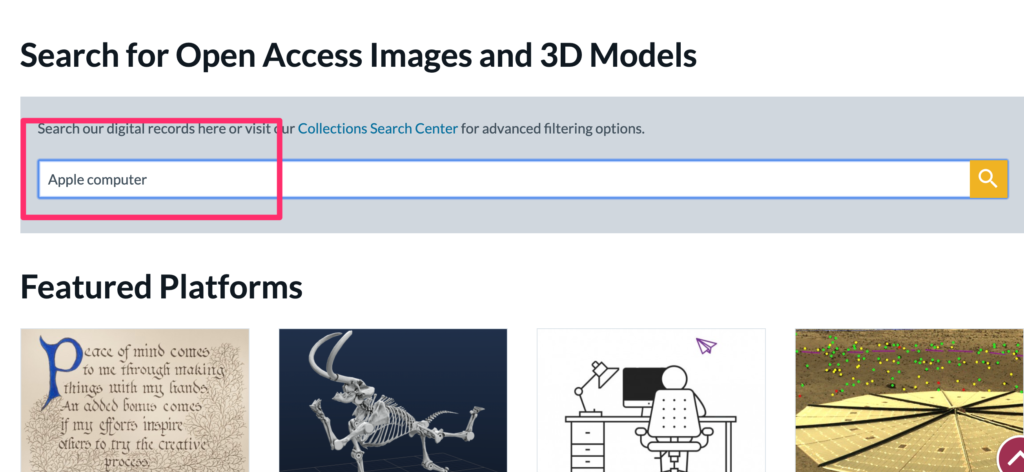
The opening screen offers several opportunities to explore the site. If you just scroll down on this opening page, you should find a search box you can use to begin an exploration.

I needed a demo topic so I decided to search for information about Apple computers. Apple and I go back to the Apple II and I wanted to see what they had.

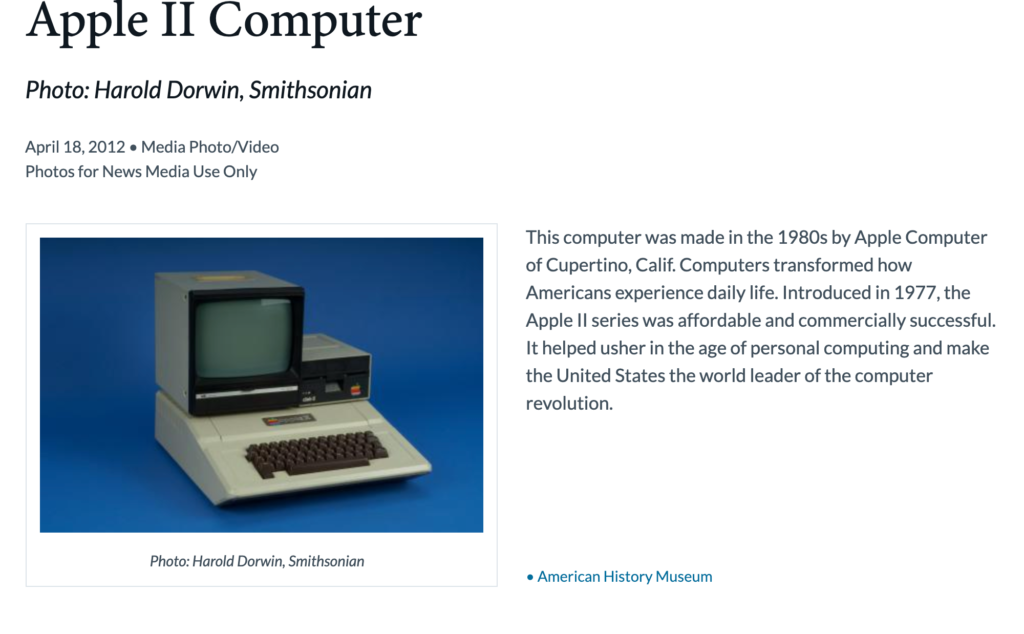
So, the search turned up 40 hits on Apple computer and then lists the options underneath. I was most interested in the computer I first used so I selected the link to Apple II.

Looks just like my first Apple II. No lower case type and this small monitor.

Educators are directed to a special site for resources.

Loading

Cartoona

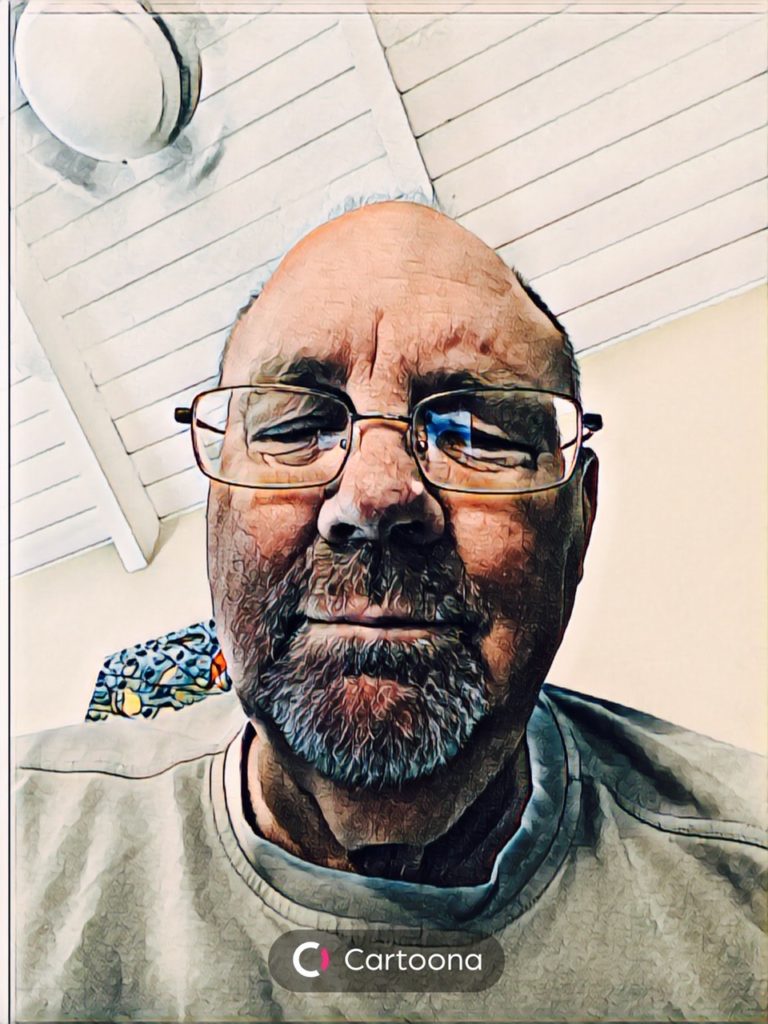
This is an unusual recommendation for this site. There are obviously many apps that allow the manipulation of selfies and photos to add effects of one type or another. I don’t have a use for most, but I do find opportunities for those that turn a photo into a cartoon. I like these when a service requests a photo/avatar.

Cartoona has many options for photo manipulation, It is free with a one price (pretty steep) for an additional pack of more “filters”. I found the free version satisfactory for my interests. Here are a couple of examples of what I mean by creating a cartoon image that could be used when a site requests an avatar.

Loading

Missing in action

I apologize for the long delay since my last post. We are spending a couple of months in Hawaii avoiding the cold of a Minnesota/Wisconsin winter. I am writing. I try to take on a major writing project while I am here. I also keep a travel blog when we are on the road. My project this year is an update of an online resource for educators called The Participatory Web and Meaningful Learning. I started this resource when online authoring became practical and have updated it as new developments have become available. It needed another revision. In addition to assuring the content is current, I thought it important to write a new section devoted to the now apparent downside of social media and other common Internet services. I have included the first section of this addition below.

Title: Can the potential of the participatory web be salvaged

I wrote the first draft of this site quite a few years ago. My wife and I had been publishing a textbook for future educators entitled “Integrating Technology for Meaningful Learning”. We continue to update this text. Some of the core ideas of our textbook were based on a book by David Jonassen entitled “Computers in the classroom: Mindtools for critical thinking”. Jonassen made the argument that instead of K12 educators focusing on helping students learn to use computers and computer applications, educators could apply popular computer applications (e.g., word processing, databases, spreadsheets) to tasks that would encourage thinking and learning. Our effort took this idea and embellished it a bit by expanding the theoretical background as an application of generative learning and project based learning and adding to the list of tools Jonassen had first identified. 

To put our books in a historical context, these ideas were being promoted to future teachers at a time before schools had much Internet access. As the Internet became more ubiquitous, we began writing about potential classroom applications. Our first effort was a separate textbook (Integrating the Internet for Meaningful Learning, 1996). I see Amazon still has a few copies if you have a couple of bucks (yes, 2-3). We soon combined our efforts into a single book and the maturation of the Internet that encouraged this integration was popularly described as Web 2.0 (https://en.wikipedia.org/wiki/Web_2.0). 

The idea of Web 2.0 can be understood from some of the alternate labels applied at this time – Read/Write web, Participatory Web. The core idea was that the Internet had advanced beyond an opportunity to consume information, but the Internet was now an opportunity for those connected to generate content as well. The word “generate” is crucial. Here was a way for authentic production of content of varying types. By our way of using the adjective authentic, we argued for the value of communicating, discussing, and arguing with a real audience and not just producing artifacts for the teacher to evaluate.

This was kind of an update of what composition educators had imagined as writing to learn, but not limited to the production of text. We began writing about authoring to learn and teaching to learn. 

These were heady times for the Internet and we definitely had the fever. The promise of everyone who was interested becoming involved seemed to have great promise for education, politics, and commerce. The Internet offered meaningful opportunities for participation that simply had not existed previously. The title of the resource we continue to offer with this emphasis remains described as “Meaningful learning and the participatory web” [https://www.learningaloud.com/participate/]. 

We wrote books that were sold, but the call of an open, participatory option was difficult to resist. I first wrote the “Participatory web” book as a wiki because I was writing about classroom use of wikis in our traditional textbook and wanted to experience taking on a substantial wiki project as a way to acquire credibility for what I knew about wikis. There are some challenging security issues in hosting your own wiki and I have moved and modified the content several times until it is now hosted as a WordPress application. Again, you learn from these challenges and what I have now is more secure and still easy for me to update resource when I have the time.

I am writing this lengthy introduction as a sort of apology. The participatory web has not developed as the force for good we had anticipated. Since I spent so much time in the decade of the development of the social potential of the web as an advocate, I must accept some responsibility. This section of my participatory web resource is newly written as an analysis of the present state of affairs and what we collectively might do about it. The content is based in my style of trying to make academic writing friendly and still trying to be true to the research I have consumed to inform my content. I provide references you can examine if you want to see where my ideas come from. In truth, I am now a retired academic so I no longer am an active researcher and what I offer is based on a review and integration of the literature. At this point, I can actively explore the tools of the online world (I still operate a server), but not study how students use these tools. 

Internet Utopian

I am probably most accurately described as an Internet utopian. This is a descriptive phrase assigned to those of us who were heavily involved online and before we took some time to discover that not all applications of the social web were making a positive contribution to society. 

When the Internet matured to the point that most folks who were online could not only consume, but also contribute to online discussions, I thought what was called Web 2.0 or the participatory web would engage folks in important issues because they would now have a voice. What occurred was unanticipated and to this point disappointing or at least this is where things seem according to many. Online activity is argued to be secluded in echo chambers and limited by filter bubbles. Rather than expand discussion, present online experiences are described as both more rancorous and narrow. 

  • –  – –  – – –  – – – –  – – – – –  – – – – – –  – – – – – – – 

Echo chamber – an environment in which a person encounters only beliefs or opinions that coincide with their own, so that their existing views are reinforced and alternative ideas are not considered.

Filter bubble – a situation in which an Internet user encounters only information and opinions that conform to and reinforce their own beliefs, caused by algorithms that personalize an individual’s online experience.

  • –  – –  – – –  – – – –  – – – – –  – – – – – –  – – – – – – –

The utopian view of the Internet seemed to end with the election of 2016. This for many was the first awareness of targeted advertising, third-party cookies, fake news, and the collection of personal information by online companies they trusted. When this actually started is not the point, this for many was the beginning of the end of naïveté and an openness to being concerned with how they and those around them were being made angry with and resentful of others because they all shared information and interacted on Facebook, Twitter, and Instagram and searched with Google.

The present state of the Internet can be examined in many different ways and multiple books and research studies have addressed the interconnected issues. To make my offering manageable, I want to organize it using three themes. These three themes are not independent, but I will only briefly identify ways in which they interact to produce what we experience. 

  1. What seems free isn’t
  1. What generates attention is not necessarily the truth
  2. You and I sometimes just want to believe what we want to believe

Loading

WT:Social

One of the concerns that many have about Facebook is that this social media service collects user information as compensation for access to the service. Facebook is not a subscription service, but it relies on the value of information collected from users to sell ads more effectively to clients.

Various alternatives to Facebook have been developed, but despite significant concerns that Facebook has an unreasonable influence because of how it uses information it has been difficult for these alternatives to gain traction.

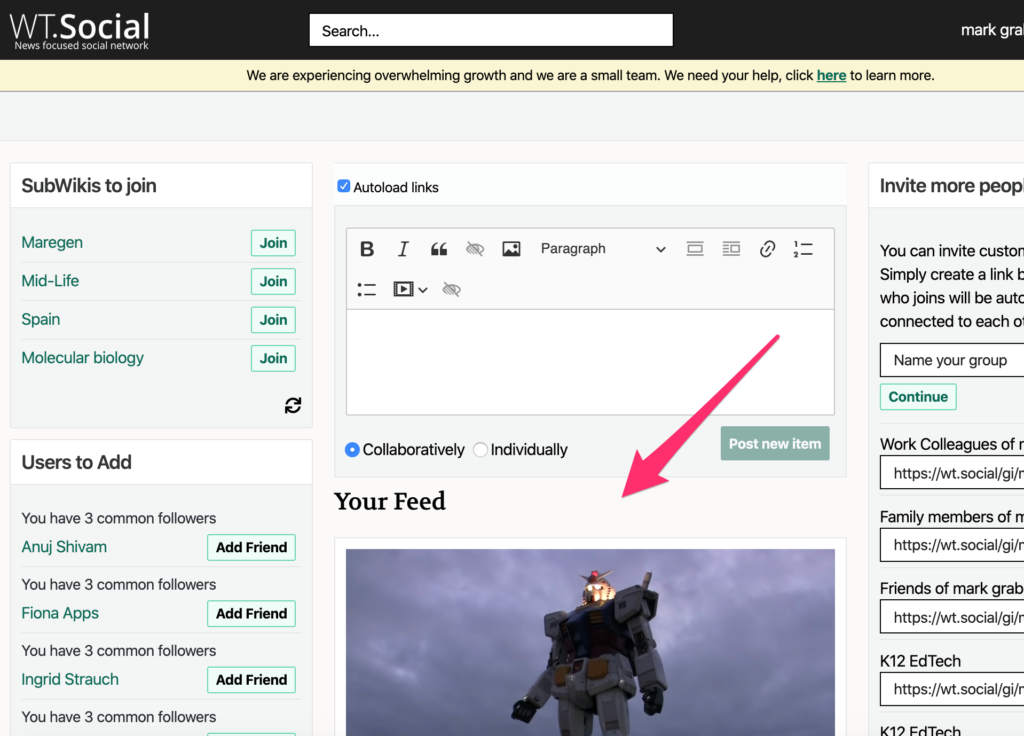
One of the more interesting efforts to offer a platform that intends to position itself in opposition to Facebook and Twitter is WT:Socal. I have now used this platform for several months and described my initial reaction at that time.

The terminology of WT:Social is a little different. It has a main feed that presents content from friends and the subwikis you follow. A subwiki is a topical group that individuals join and submit content to that group.

When you want to give WT:Social a try you will be asked to pay a subscription fee – by the month or year. If you do not want to pay, you will be put on a waiting list to be granted access. I did not pay and I was granted access in a few days. I have tried to address the subscription fee with the developers, not because I did not think paying for a service that does not depend on ad revenue is important, but the options are out of proportion to the amounts requested. $13 a month is about what I pay to purchase server space for my own blogs and to pay this amount to an unproven service does not seem a reasonable investment. What I requested of WT:Social to make a contribution of an amount I determine. At this point, I would likely contribute $20 and then see what develops. I have yet to receive a reply.

WT:Social is easy to use and powerful. I like it. The problem is what is called the network effect. The value in a social service is more the individuals you interact with there and not the sophistication of the service. It is tough to overcome this problem in a new service especially if you expect $13 a month.

My recommendation. Join without paying the subscription fee. Pay if the money is not an issue. Comment on the lack of flexibility in financial support as part of your participation. Join some relevant subwikis and submit content linked from other sources you author and see what happens.

We need to be part of alternatives to Facebook and Twitter if for no reason other than limiting monopolies.

Loading

Social bookmarking with Google

The idea of social bookmarking is that a collection of bookmarks can be created and shared socially. These two functions are independent so that in one application a collection of bookmarks is shared with a group. In the other applications, a group collaborates in creating a collection of bookmarks. Both techniques have potential value in a classroom situation. The teacher may want students to examine a set of online resources. The teacher and groups of students may want to organize a collection of bookmarks on a specific topic.

There are various ways to engage in social bookmarking. I pay for and share using a powerful tool called Diigo. In this post, I am explaining the use of Google and the Google browser to engage in similar practices

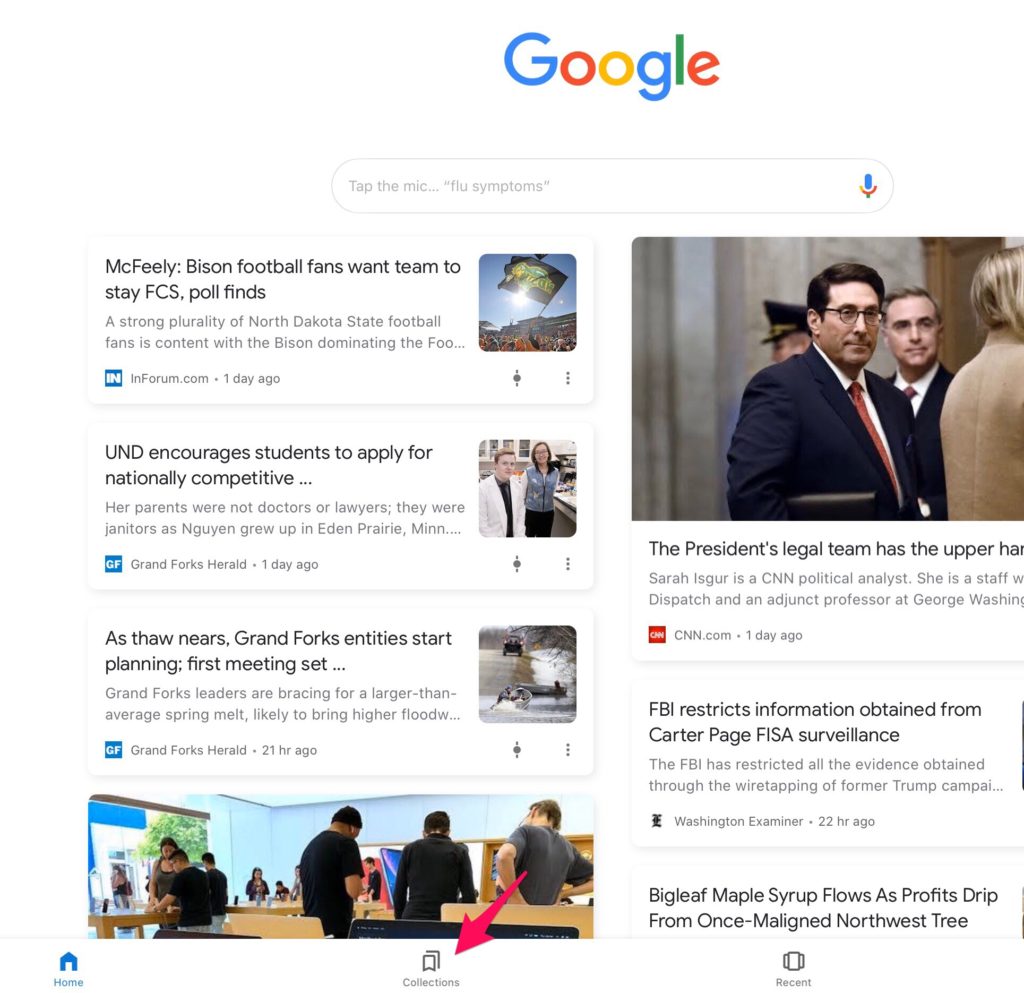
This is the screen one sees when using the Google browser. The first step in the process I have in mind is the creation of a collection of bookmarks and the first step in this process is the creation and naming of a collection.

The collection button appears at the bottom of the screen display when using the browser.

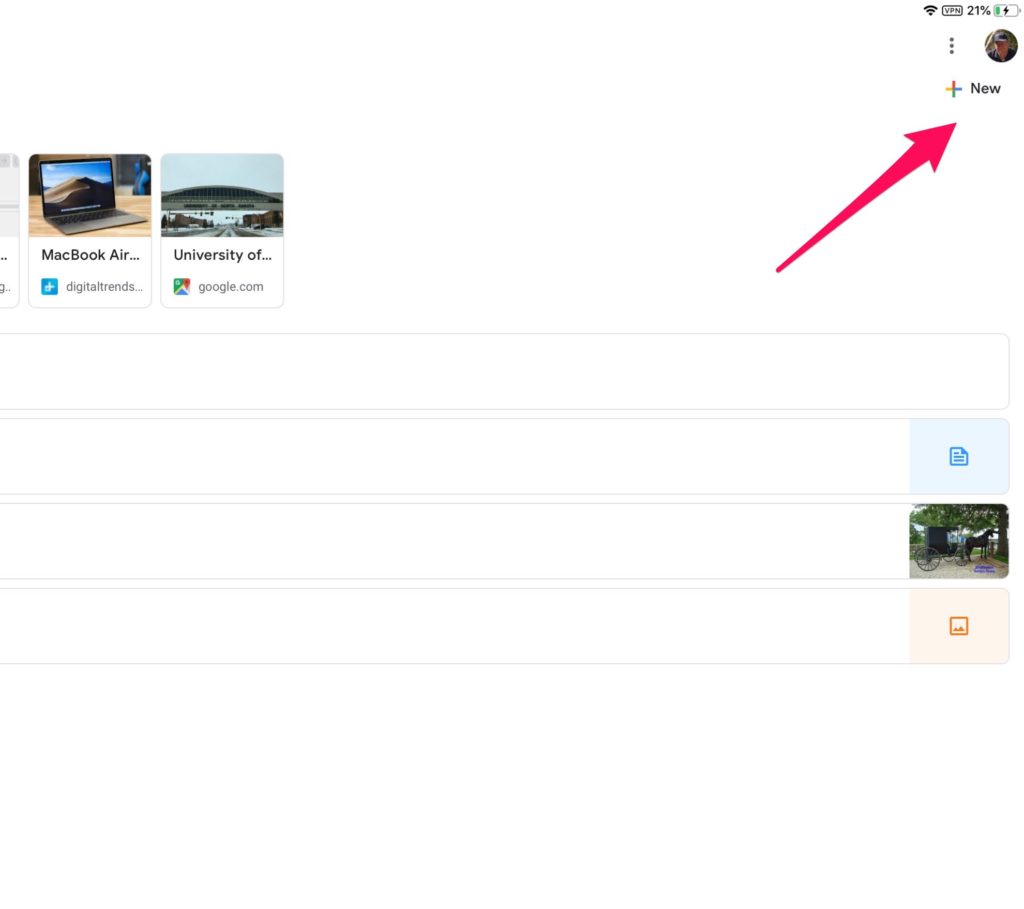
Selecting this button allows a new collection to be identified. Using this button displayed the existing collections and the + button us used to create a new collection.

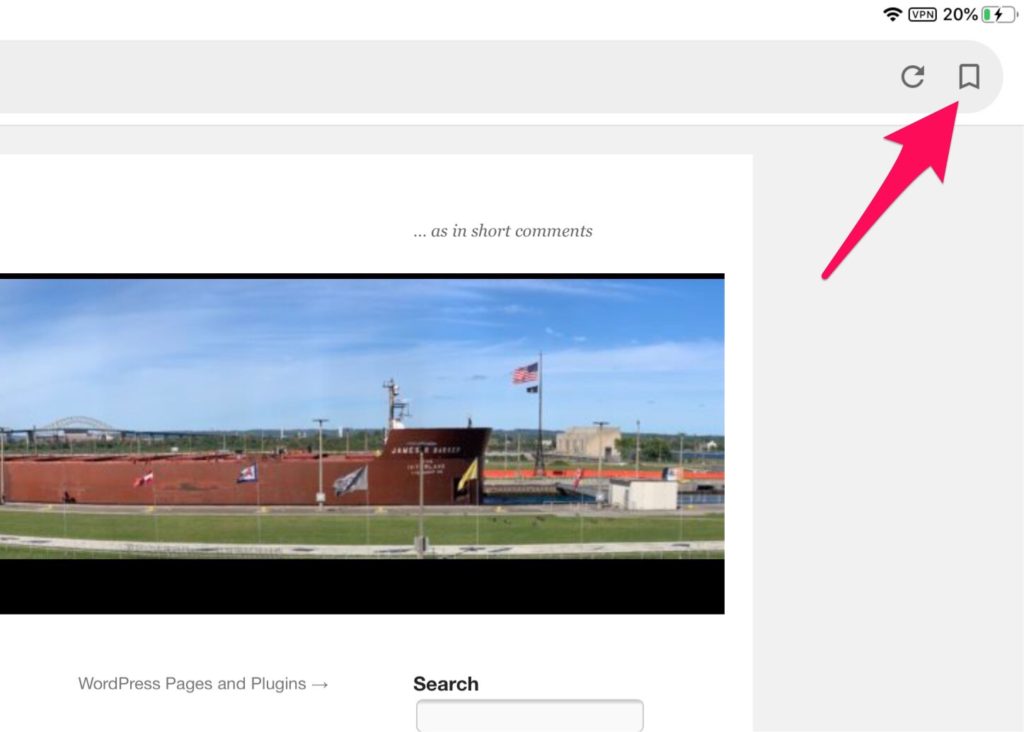
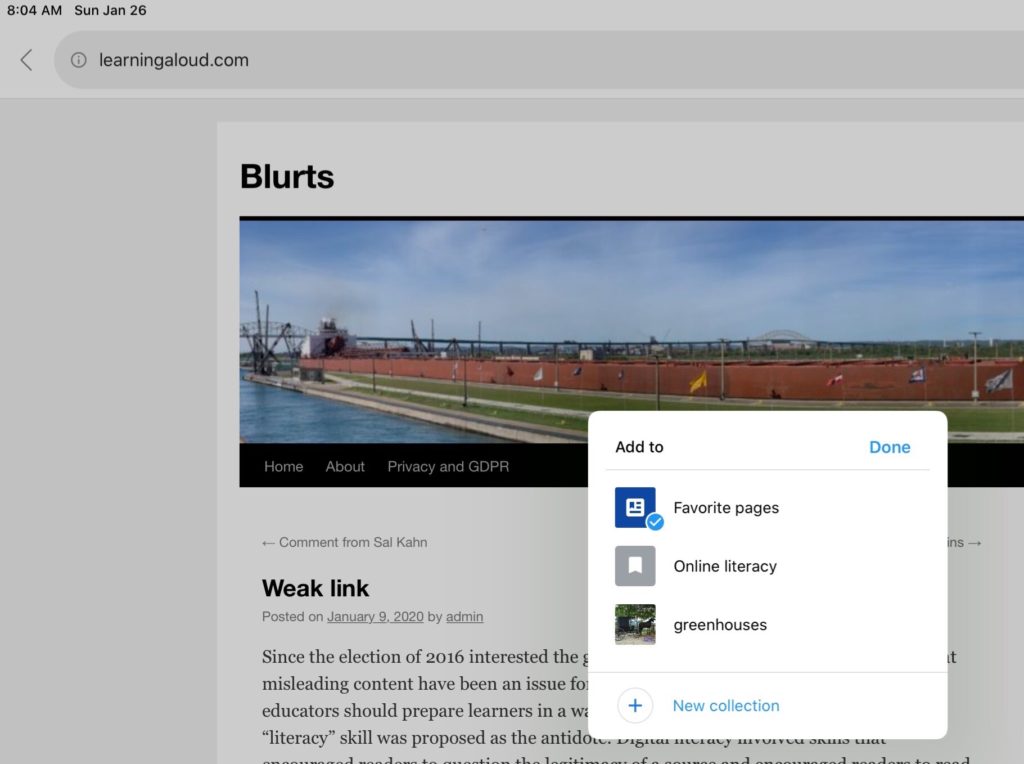
Once the desired collection has been established, you can now add bookmarks to this collection. To add a bookmark, you browse with the Google browser and then use the bookmark icon when you are on a web page you want to add to the collection.

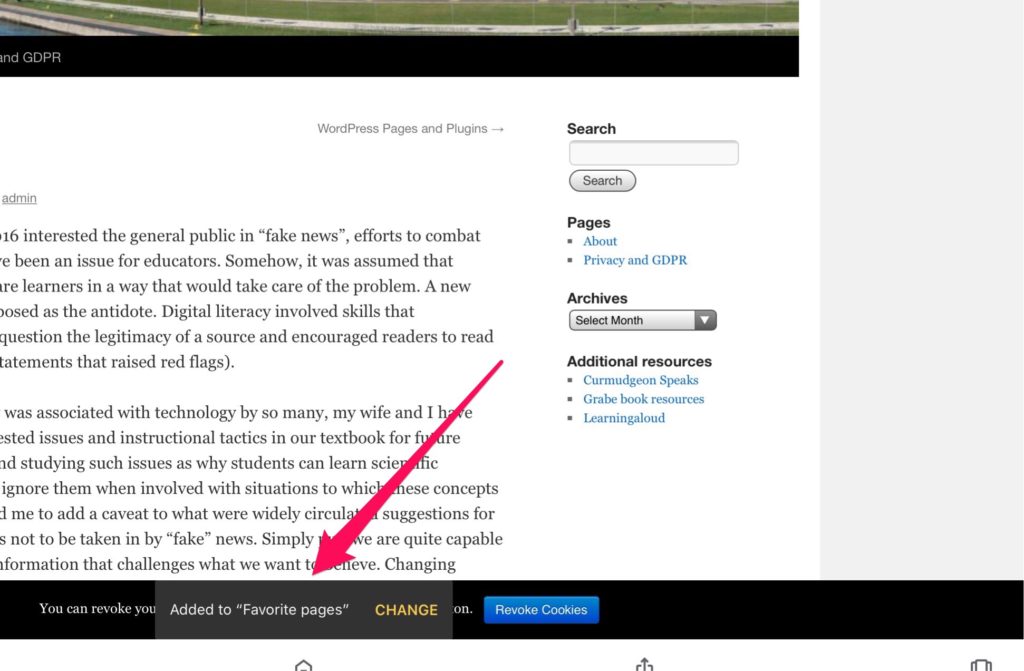
Selecting the bookmark icon, causes the display at the bottom of the browser window to display the default collection and offer you the opportunity to switch to a different collection.

The “change” option brings up the existing bookmark collections and you select the one you want.

This process is repeated to build up the collection of bookmarks.

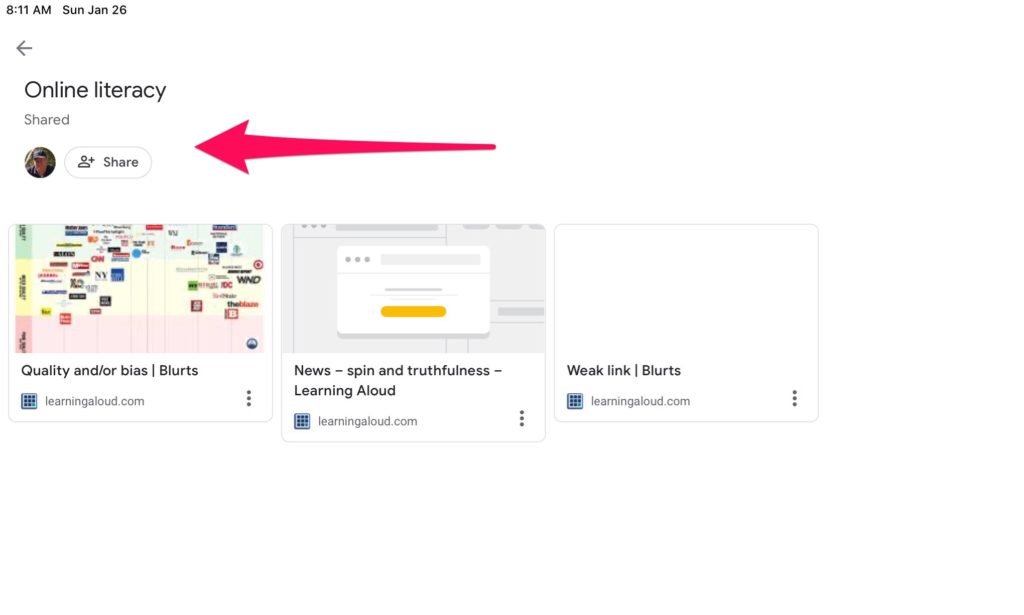
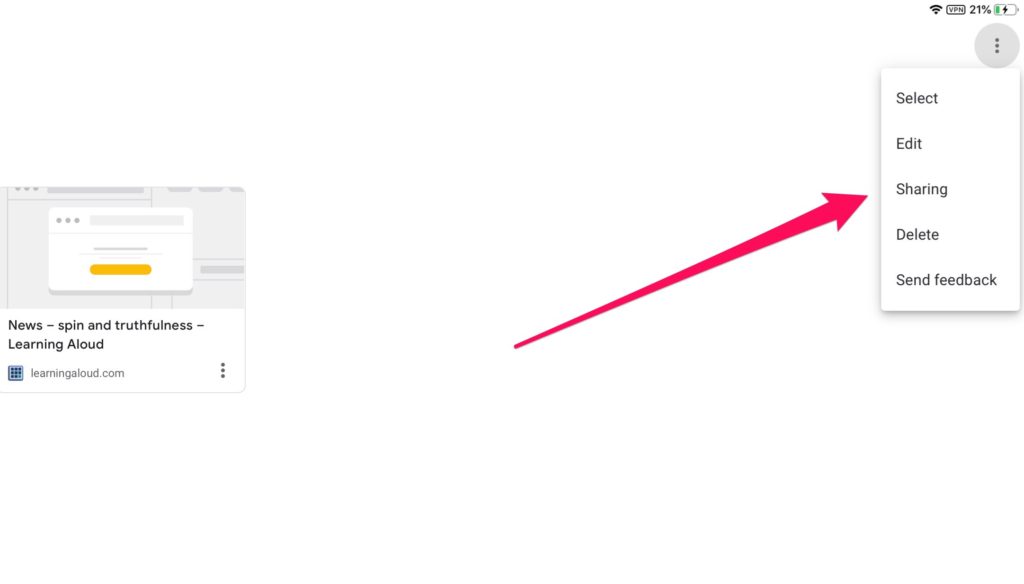
At some point you will want to share a collection. This is done from the collection page.

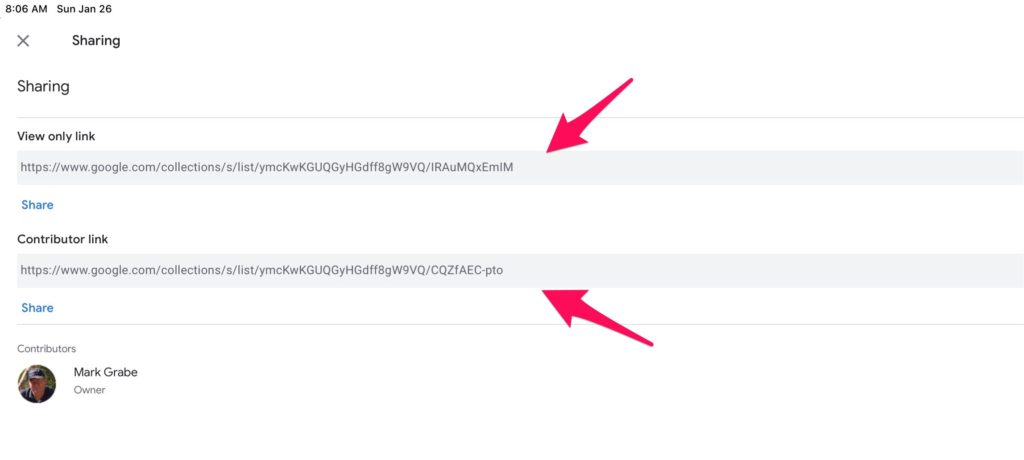
There are two sharing options. One offers “read only” access. This would be the approach if a teacher created a collection and wanted students to examine items in the collection. The link identifying the collection would be shared with students. The other option opens up the collection to a collaborative process. This link would be shared with students who then could use the Google browser to add and view links.

Loading

Google Alerts

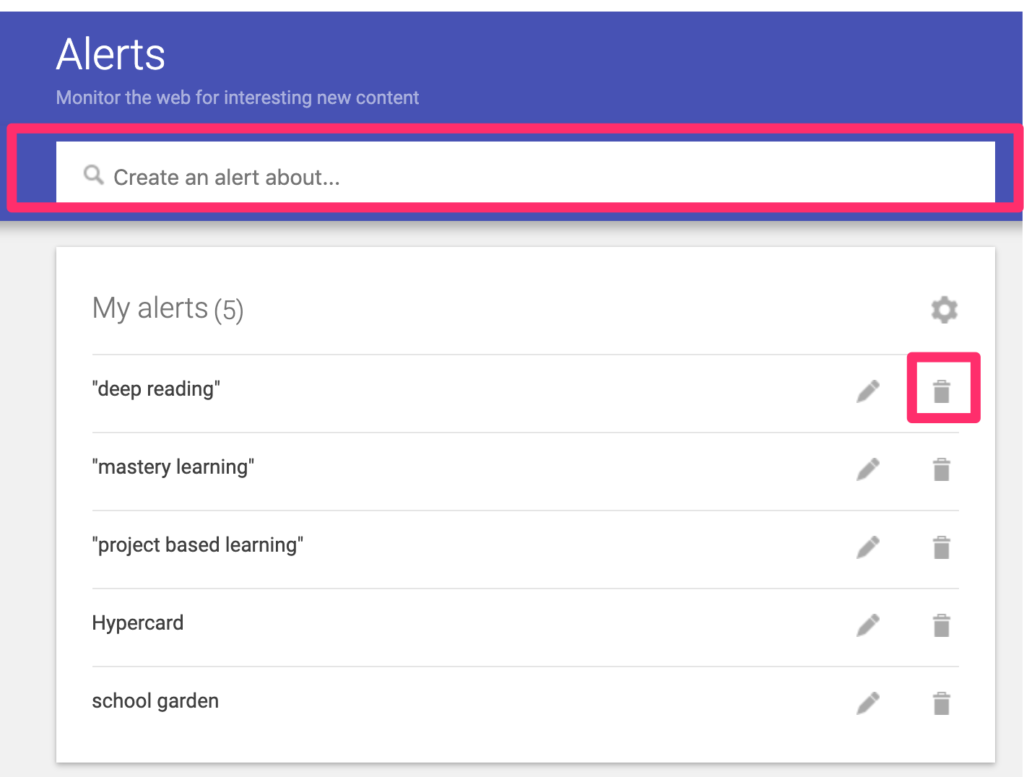
Google Alerts allow a user to create an automatically repeated search that returns results to a designated email address. The easiest way to set up a search is to use the address https://google.com/alerts from your browser. This address will display existing alerts you have established, provide a way to terminate an existing search (see trash can following an existing search), and the search box for a new alert.

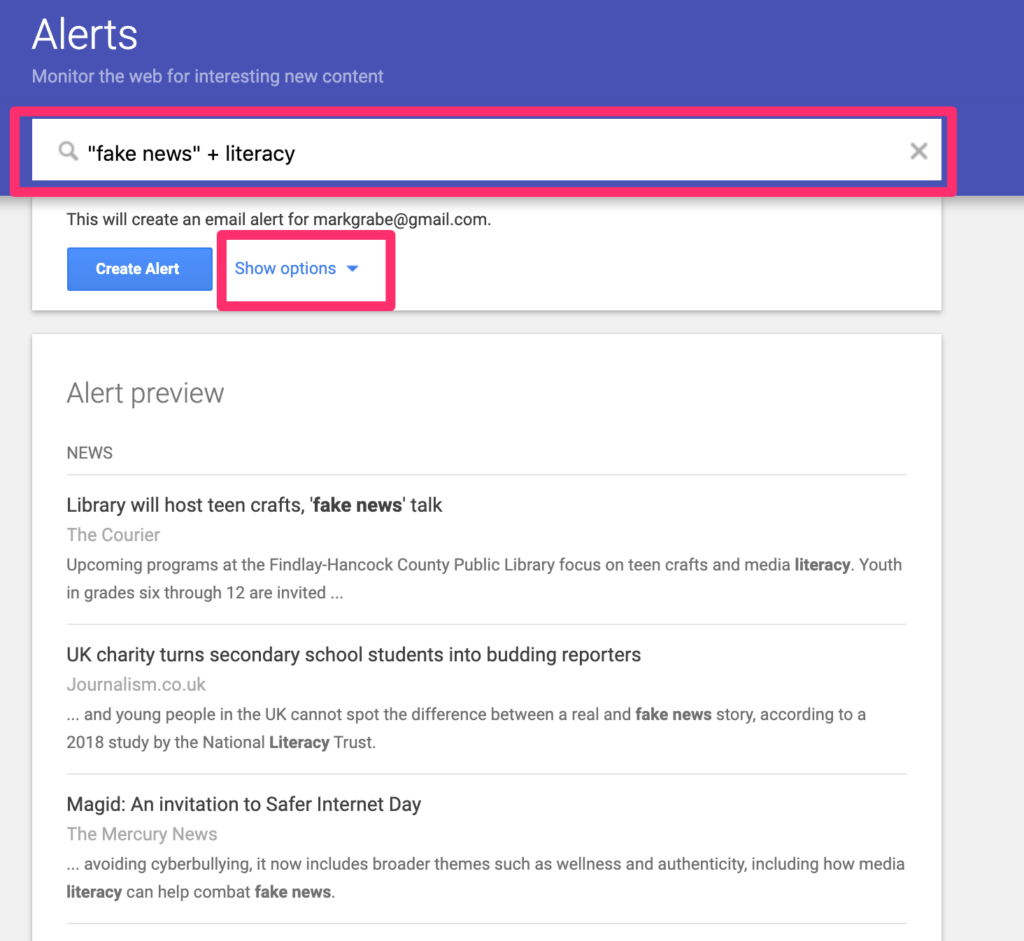
Your search to generate an alert using the same rules you would apply in implementing a one time search. Samples of what these descriptors will generate appear when the descriptors are entered. It is helpful to set specific options you would like to apply.

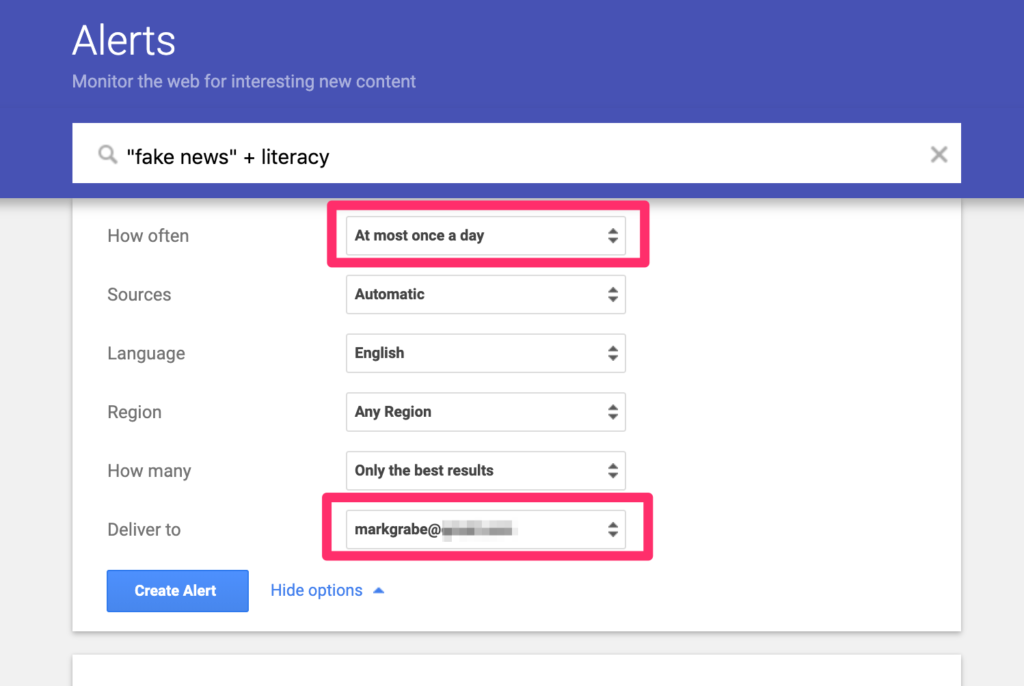
The following options allow a user to control parameters such as the address you would like to be used to return results and the frequency you would like to receive results.

Alerts offer educators a convenient way to follow topics on a permanent basis or for a time period during which a specific category of information might be useful. Alerts are perfect as a way to return current information relevant to a classroom project.

The following video takes you through the process I have just described.

Loading