One of the ways I (an old academic) think about technology is as a tool for implementing great ideas that have been around for some time but would be impractical without the advantages offered by the new tool. If I have a way to identify new opportunities (which are not really new), this is it. If old folks are credited for wisdom, this how I think it works.
I am a fan of digital content (ebooks and online content) because the format allows manipulation and not just consumption. While I do argue that it is personal cognitive behavior that makes any learning experience productive (minds on rather than hands on), the integration of tools and tasks with content is about the best we can do to encourage such productive personal behavior in others.
I refer you to a recent blog post explaining the highlighting/annotation potential of Newsela as an example. This is a commercial example of the type of idea I have been exploring and you may have tried without considering the learning benefits. For example, you may highlight and annotate what you read in Kindle books. Now, add a social component to such activities and you may really have something. A discussion (teacher or author led or not) can spring up as learners react to the content they encounter. Challenge the author, ask a question, add an example – use the opportunity provided by the technology to make an encounter with ideas more active.
When it comes to engaging students, perhaps we are afraid of the obvious. Topics that are contentious and charged engaged us all. We have strong opinions and when allowed to express them we need little encouragement to comment and argue for what we believe. We make efforts to learn more without prodding. Gun control, equity issues, political candidates, climate change, health care, abortion, etc. are topics that attract attention and generate engagement. The level of engagement may reach the level that make us uncomfortable personally and may bring scrutiny from others (parents, administrators) when we share our position and logic. It is just frustrating that educators are asked to make dull topics interesting but are expected to avoid interests that already exist. These issues are huge in the decisions adults make and despite all of the rhetoric about preparing students for their futures, we avoid encouraging the development of skills for making personal decisions about such topics.
I am a fan of Newsela because the service attempts to offer “news” to students at multiple reading levels. This Newsela post comments on the issue of politics in the classroom and references a new book coming out of the Univ of Wisconsin on the topic. Also take a look at this related piece from NPR. I am really tempted to get the book noted in the NPR piece, but the $30+ price for Kindle book kind of violates my personal fair price guideline.
A week or so ago I generated a post questioning the value of an “hour of code”. I was attempting to point out that meaningful commitment to “computational thinking” required much more and those interested should focus on assuring high schools offer a programming course before worrying about whether elementary and middle school students are exposed to rudimentary forms of coding. To me, there is not much value of generating interest without the opportunity to actually become involved.
The U.S. News and World Report recently provided an article that provides some data and details on programming instruction. If you are an administrator or educator interested in this issue, this article explains the reality I think needs to be understood.
Google allows the creation of a shared photo album within Google Photos. Here is a quick tutorial. Imagine a situation in which individuals visit the zoo and want to combine their best images into a collaborative album.
Step 1 – Someone needs to create the shared album. If this is you, here is what you do.
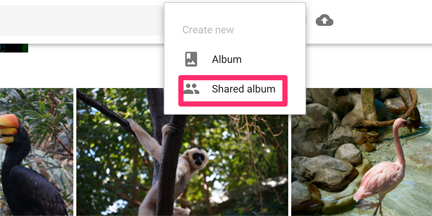
From your Google photos account, select the + icon
A drop down menu should appear and share album will be one of the options
Step 2 – make your initial contributions
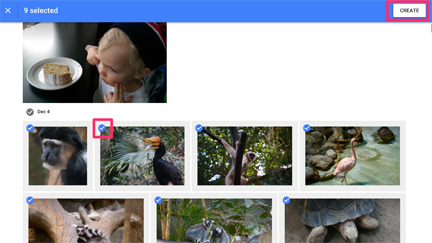
You Photos collection will open and you can then select the images you want to add to the collaborative album. You should then select create (upper right-hand corner).
Step 3 – enter name for the shared album
Enter a title for the shared album and then select the three dot icon
Step 4 – Share and generate link
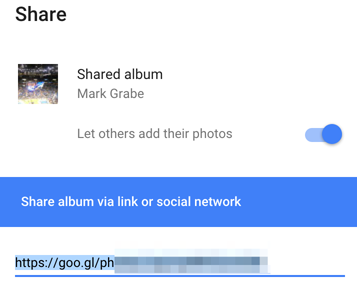
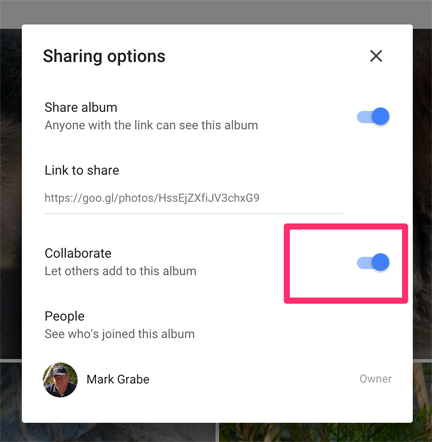
When the three dot icon is selected a dialog box appears with an address for the shared collection. You could provide this address to others if all you want to do is share your selections.
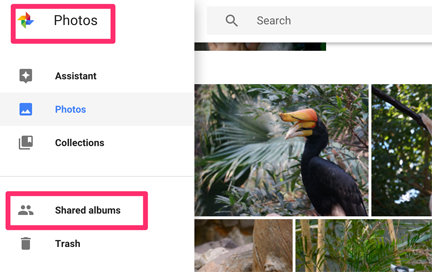
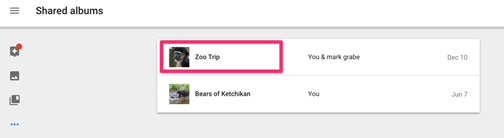
Step 5 – Return to your photos home page and select shared albums
This may seem a little strange, but the next step is to return to your photos home. From this location, access your shared album(s).
Step 6 – Select album you want designated for group contributions
Select the shared album you intend to be used for shared contributions.
You should now see a slider to allow others to contribute images (not just view what you have shared).
Send the link to others
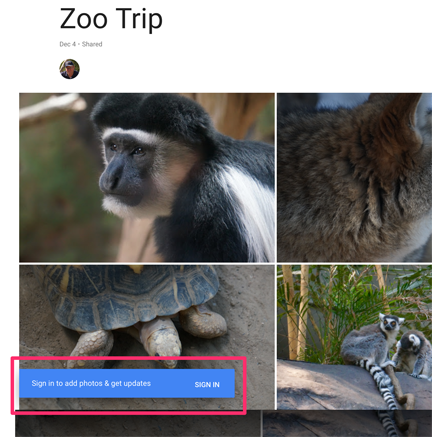
Step 7 – Others connect with the link provided
At this point, your work is done and it is time for your collaborators. When someone uses the link you provided, they must first sign in.
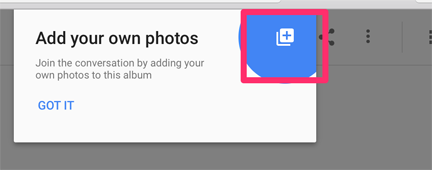
They then join to add photos.
An icon should now appear allowing the selection of photos from their Google Photos.
I wrote a couple of tweets this morning critical of the “hour of code”. In doing so, I violated a personal rule. Twitter is a poor tool for explanation or deep thinking so it is best to avoid it if you want to communicate effectively.
I am not against programming and have benefitted greatly because I had the background necessary to develop the software necessary to do my research.
Here is a way to understand what I think is wrong with educator interest in the “hour of code”.
Take elementary or middle school “STEM” initiatives as an example. The concern being addressed is that younger students and certain categories of students do not see themselves in STEM careers. As a consequence, they do not take the coursework necessary to prepare for STEM majors at the college level or do not take secondary preparatory courses seriously enough should they enroll. Many STEM activities attempt to change such perspectives. Such activities might be described as “teasers” intended to create interest and a sense of personal relevance.
Here is what is different with programming. Many K-12 districts do not offer programming courses and most states do not recognize programming courses that are available as satisfying a science or math requirement. The “hour of code” is a tease without the opportunity for follow through.
We have considerable experience evaluating limited programming experience (from the wave of interest in LOGO). What the research suggests is that most limited experiences develop little expertise and little evidence of transfer (some now would label this as computational thinking).
So, if you (administrators or teachers) are really interested in the value of programming start with what matters. Does your institution offer a programming course? Does your state “count” the credits earned from taking such a course?
An hour of code might matter if it generated enthusiasm for what could come next.
If you follow my work, you can probably guess that I spend little time promoting the educational value of digital games. But, I realize that games are an important learning option promoted by many in the ed tech community. Because I make a serious effort to influence other practicing and future educators, I try to be analytical when I find my own priorities in disagreement with what others propose.
I think I see games as adding unnecessary layers to the learning process. It is not that games are not productive, it is that this productivity comes at a cost. Games provide an experience to interpret, but my analysis suggests that it takes several layers of activity to generate this experience. Game play itself represents one layer. Playing a game requires engagement with the scenario of the game, following the rules of the game, generating the actions required by the game, etc. Expending the mental effort to engage in the scenario according to the rules of the environment provides experiences. The second layer involves an interpretation of these experiences. One must process this experience to identify facts, principles, rules, etc. Finally, one must integrate these nuggets with existing internal knowledge.
Contrast this series of activities with direct instruction. One interpretation of direct instruction might be that an author or a presenter attempts to identify facts, principles, rules for you and you then must engage in only the final stage of the learning process. There is some amount of interpretation of the external experience, but there is also some “preprocessing” by the individual serving as the source. There is no “game play” layer at all.
I am more a fan of simulations (or life) as a way to provide experiences. There is some effort involved in engaging a simulation or living, but I would describe this effort as authentic with some future transfer value. When we see value in providing learners experiences in processing primary sources as a component of learning, it makes more sense to me to engage with experiences that are as close as possible to the future experiences we expect learners to have to process.
I am also a fan of direct instruction. Why not skip the outer layers and provide learners in as succinct a fashion as is possible the facts, rules, principles we want them to understand and retain. Learning, when you get right down to it, is about the processing of an input by each learner. Each individual must do the work to modify his or her existing models of the world or find links between new experiences and what they already know. These are not easy tasks and overburdening learners with other simultaneous requirements may be damaging to the success of this final and most important stage.
Surprisingly, I have developed and evaluated learning games. My interest was in the development of reading skills. I still see this as a little different. The external “layer” of learner experience in such games is reading. Applying (or attempting to apply) the skill of interest served the goal of the game. There were no layers to get through to get to the priority process.
It also seems possible I am just not a game person. I do believe our own experiences play a role even in how we understand professional pursuits. I seldom play games that involve mental skill as a form of entertainment. If people want to socialize, I would rather talk rather than play cards and talk. I recognize that games provide a certain motivational component for some people. There than may be the trade-off to be considered – motivation vs. added cognitive demands.
Having said all this, I do recognize the serious approach some take to developing and evaluating games. I tend to promote learners be exposed to a variety of learning experiences with consideration given to the proportion of each activity. This has more to do with learning to learn rather than the acquisition of content knowledge/skills.
One of my colleagues, Richard van Eck, has been a noted supporter of serious games for some time. In a recent Educause Review column, he contemplates the past ten years of his experience with educational games. I certainly encourage any ed technologist to review his comments as they provide a solid overview of the topic.
I encountered a recent article on “Annotating the scholarly web” in Nature and the author was promoting an activity that has long interested me (click on the highlight tag attached to this post to see earlier posts with a similar theme). The article describes Hypothes.is which is open source software for pdf and web annotation and highlighting. This article would not be published by Nature because it describes this software. It was included because the idea is to use the sharing of highlights and annotations as a way for scholars to interact in the discussion of published work.
As I suggest above, social bookmarking/highlighting is not a new idea. What this venture has going for it that is unique is the effort to go beyond developing the tool and attempting to establish partnerships with publishers.
I investigated Hypothes.is a bit more and have a better understanding of how they see the “big picture”. In addition to attempting to gain the cooperation of partners, the group is also working toward the development of annotation standards. One of the problems at present is that the various methods for web highlighting operate in different ways and likely struggle to develop a sufficient following to continue. Working toward standards would allow those adopting the standards to use different tools to share.
Hypothes.is is also thinking beyond the development of tools for advanced scholars and presently offers suggestions for how students might use their resource.
Here is my take on how this works. I think of it as similar to tools I use to highlight pdfs I read (e.g., Skim). It is like the software adds a layer over a page and allows a user to mark on this layer. The original is not actually altered. The software/online service saves the marked up layer separately. When shared (or just retrieved by the individual adding the highlights), the original and the extra layer are combined for viewing.
Highlighting and annotating (with the opportunity for replying to comments) goes beyond the addition of comments at the end of a document or post. It is much easier to understand the context of an embedded message.
Hypothes.is allows public, private, or defined group highlighting. I have added some highlights to a personal page so you can see what a marked-up page looks like.




You must be logged in to post a comment.